

Key Takeaways
- A sample cost segregation study for manufacturing buildings can identify 20-40% of components for accelerated depreciation
- Manufacturing facilities typically generate $2-4 million in first-year tax savings through proper cost segregation analysis
- Sample studies show equipment connections, specialized systems, and interior fixtures qualify for 5-7 year depreciation
- Understanding cost segregation methodology helps manufacturers maximize tax benefits on facility investments
- Professional engineering analysis separates building costs into appropriate tax categories for optimal savings
- Manufacturing buildings offer unique opportunities for cost segregation due to specialized equipment and systems
A sample cost segregation study for manufacturing buildings demonstrates how businesses can accelerate depreciation deductions and generate substantial tax savings by properly classifying building components into shorter recovery periods. This detailed analysis shows the methodology, findings, and benefits that manufacturing companies can achieve through professional cost segregation services.
Understanding Sample Cost Segregation Study Methodology for Manufacturing
A sample cost segregation study for manufacturing buildings begins with the collection of comprehensive data, including architectural drawings, construction invoices, equipment specifications, and site inspection reports. The analysis team, comprising engineers, tax professionals, and certified cost segregation specialists, thoroughly examines every component of the facility to determine the most suitable tax classifications. Manufacturing buildings present unique opportunities because they contain specialized equipment connections, process-specific infrastructure, and industrial systems that qualify for accelerated depreciation schedules.
The methodology involves detailed component identification where each building element is analyzed to determine whether it qualifies as a structural building component subject to 39-year depreciation, land improvements depreciable over 15 years, or tangible personal property eligible for 5-7 year recovery periods. Professional engineering analysis ensures accurate classifications that withstand IRS scrutiny while maximizing tax benefits for the property owner. The process requires thorough documentation and supporting evidence for each classification decision made during the study.
Data Collection and Documentation Process
The documentation process for a sample cost segregation study requires gathering construction contracts, invoices, blueprints, equipment purchase orders, and installation specifications that detail how facility components were installed and integrated. It is not advisable to do a cost segregation study on your own.Manufacturing buildings often have extensive documentation due to regulatory compliance requirements and specialized equipment installations that must meet industry standards. This detailed documentation supports the engineering analysis needed to properly classify components and defend the study results during potential IRS examinations.
| Building Component | Depreciation Period | Typical Allocation | Tax Savings Impact |
|---|---|---|---|
| Building Structure | 39 years | 60-70% | Standard depreciation |
| Manufacturing Equipment Connections | 5-7 years | 15-25% | High acceleration benefit |
| Site Improvements | 15 years | 10-15% | Moderate acceleration |
| Specialized Systems | 5-7 years | 5-10% | Maximum tax benefit |
Detailed Sample Cost Segregation Study Results for Manufacturing Facility
A representative sample cost segregation study for a $25 million manufacturing facility demonstrates the significant tax benefits available through proper component classification. The facility features multiple production lines, specialized equipment installations, office areas, and supporting infrastructure, which create opportunities for accelerated depreciation. Initial analysis revealed that the property was being depreciated over 39 years, resulting in an annual depreciation of approximately $641,025, which provided limited tax benefits during the early ownership years.
The completed cost segregation analysis identified $8.5 million in components eligible for accelerated depreciation, including $6.2 million in 5-year property and $2.3 million in 15-year land improvements. Manufacturing equipment connections, specialized electrical systems, process piping, and material handling equipment are qualified for the shortest depreciation periods. Accelerated depreciation benefits allowed the property owner to claim $2.6 million in first-year tax savings, representing a return on investment exceeding 13,000% on the $20,000 study cost.
Manufacturing-Specific Components and Classifications
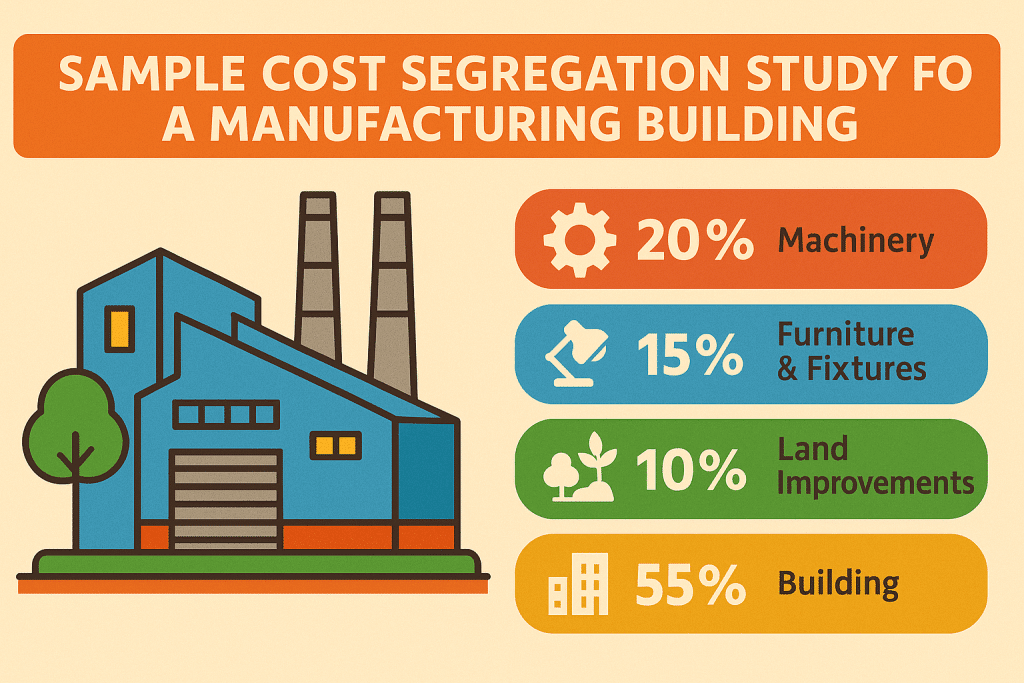
Manufacturing facilities contain unique components that create exceptional opportunities for cost segregation including process-specific electrical systems, specialized ventilation equipment, material handling infrastructure, and equipment foundations designed for specific machinery. These components often integrate closely with production equipment but remain part of the building structure, creating classification challenges that require engineering expertise to resolve properly. The sample study showed that these specialized systems represented over 30% of the total building value and qualified for depreciation schedules of 5-7 years.
Equipment Integration and Tax Treatment
The integration between building systems and manufacturing equipment creates complex classification issues where electrical connections, compressed air systems, process piping, and specialized foundations must be analyzed to determine appropriate tax treatment. Components that serve the building generally qualify for building depreciation, while systems that primarily support specific equipment may qualify for personal property treatment. The sample study demonstrated how proper analysis of these integrated systems can significantly increase the amount of property eligible for accelerated depreciation.

Financial Impact Analysis from Sample Cost Segregation Study
The financial analysis from the sample cost segregation study reveals immediate and long-term tax benefits that substantially improve cash flow for manufacturing companies. First-year tax savings of $2.6 million provide immediate capital that can be reinvested in operations, equipment upgrades, or expansion projects. The present value of accelerated depreciation benefits over the initial years of ownership often exceeds 15-20% of the original property cost, making cost segregation studies among the most effective tax planning strategies available to manufacturers.
Beyond immediate tax savings, the study offers ongoing benefits through improved financial reporting, enhanced asset management, and more effective planning for future renovations or expansions. Manufacturing companies can use the detailed component analysis to plan equipment replacements, schedule maintenance activities, and optimize future capital investments. Strategic tax planning enabled by cost segregation studies helps manufacturers maintain competitive advantages through improved cash flow management and reduced overall tax burden.
Return on Investment Calculations
The return on investment calculation for the sample cost segregation study shows exceptional results with immediate tax savings far exceeding the study cost within the first year. Professional studies typically cost between $15,000 and $50,000 depending on property complexity, while tax benefits often range from $500,000 to several million dollars for large manufacturing facilities. The timing of tax benefits provides additional value through the time value of money, as accelerated deductions reduce current tax obligations rather than spreading benefits over decades.
Cash Flow Enhancement Benefits
Cash flow enhancement is one of the most valuable aspects of cost segregation studies for manufacturing companies, which often require substantial working capital for operations and growth. The immediate tax savings provide flexibility for equipment purchases, facility improvements, or expansion projects without requiring additional financing. Manufacturing companies can leverage these improved cash flows to maintain competitive positions, invest in technology upgrades, or weather economic uncertainties more effectively than competitors without similar tax advantages.
| Financial Metric | Before Study | After Study | Improvement |
|---|---|---|---|
| Annual Depreciation | $641,025 | $2,100,000 | +227% |
| First-Year Tax Savings | $237,179 | $2,600,000 | +996% |
| Study Cost | $0 | $20,000 | Investment |
| Net Benefit | $237,179 | $2,580,000 | +988% |
Implementation Process for Sample Cost Segregation Study Results
Implementing the results from a sample cost segregation study requires coordination between tax professionals, accounting teams, and property management to ensure accurate record-keeping and compliance with ongoing reporting requirements. The implementation begins with updating depreciation schedules to reflect the new component classifications and calculating revised depreciation amounts for current and future tax years. Manufacturing companies must maintain detailed records supporting the cost segregation findings to protect against potential IRS challenges.
The implementation process includes updating fixed asset records, coordinating with accounting software systems, and training relevant personnel on the new depreciation schedules and component tracking requirements. Property management teams need to understand which components have been reclassified so they can properly account for future renovations, replacements, or disposals. Comprehensive implementation planning ensures that the cost segregation benefits are fully realized while maintaining compliance with all applicable tax regulations and reporting requirements.
Ongoing Compliance and Documentation
Ongoing compliance requires maintaining comprehensive documentation that supports the cost segregation study findings and ensures proper treatment of component replacements, improvements, and disposals throughout the ownership period. Manufacturing facilities undergo frequent modifications and equipment changes that can affect the tax treatment of various components, making ongoing compliance monitoring essential for preserving cost segregation benefits. Regular reviews with tax professionals help ensure continued compliance and optimize tax treatment of facility modifications.
Future Planning and Strategy Development
The sample cost segregation study provides a foundation for future tax planning strategies including renovation projects, equipment installations, and facility expansions that can benefit from similar analysis. Manufacturing companies can utilize component analysis to plan future capital investments that maximize tax benefits while supporting their operational needs. Understanding which types of improvements qualify for accelerated depreciation helps manufacturers structure projects to optimize both operational and tax outcomes.
Industry-Specific Considerations for Manufacturing Cost Segregation
Manufacturing facilities present unique opportunities and challenges for cost segregation studies due to specialized equipment requirements, regulatory compliance needs, and process-specific infrastructure that may not exist in other property types. Industrial buildings often contain heavy-duty electrical systems, specialized ventilation equipment, process piping, and material handling systems that require expert analysis to determine appropriate tax treatment. The integration between building systems and manufacturing processes creates complex classification issues that require both engineering expertise and tax knowledge to resolve properly.
Different manufacturing industries have specific requirements that influence cost segregation opportunities including food processing facilities with specialized sanitation systems, pharmaceutical manufacturing with clean room environments, and automotive facilities with heavy equipment foundations. These industry-specific features often create additional opportunities for accelerated depreciation that general commercial properties lack. Industry expertise becomes crucial for identifying and properly classifying these specialized components to maximize tax benefits while ensuring compliance with applicable regulations.
Regulatory Compliance and Safety Systems
Manufacturing facilities must comply with numerous safety and environmental regulations that require specialized systems and equipment installations that may qualify for favorable tax treatment. Fire suppression systems, environmental monitoring equipment, safety lighting, and emergency power systems are often considered tangible personal property, eligible for accelerated depreciation. The sample study showed these regulatory compliance systems represented significant portions of facility costs and provided substantial opportunities for tax savings.
Process-Specific Infrastructure Analysis
Process-specific infrastructure, including specialized foundations, equipment anchoring systems, process piping, and dedicated electrical circuits, requires detailed analysis to determine appropriate tax classification. These components often serve dual purposes supporting both the building structure and specific manufacturing processes, creating classification challenges that require engineering judgment and tax expertise. The sample cost segregation study demonstrated how proper analysis of these integrated systems can significantly increase tax benefits without compromising compliance or accuracy.
Professional Standards and Quality Assurance in Sample Cost Segregation Study
Professional standards for cost segregation studies require certified specialists with appropriate engineering and tax credentials to ensure accurate analysis and defensible results. The sample study was conducted by Certified Cost Segregation Professionals who follow established industry standards and IRS guidelines for component identification, valuation, and classification. Quality assurance procedures encompass multiple review stages, supporting documentation requirements, and adherence to professional standards that safeguard both the study’s quality and the client’s interests.
The quality assurance process includes peer review by independent specialists, verification of calculations and classifications, and comprehensive documentation that supports all study conclusions. Manufacturing facilities require particularly rigorous analysis due to their complexity and the significant tax benefits that can be obtained through proper classification. Professional quality standards ensure study results withstand IRS scrutiny while maximizing legitimate tax benefits for property owners who invest in these comprehensive analyses.
IRS Compliance and Audit Defense
IRS compliance requires cost segregation studies to meet specific documentation and analysis standards that demonstrate the validity of component classifications and valuations. The sample study includes detailed engineering reports, component photographs, supporting calculations, and references to applicable tax authorities, providing comprehensive audit defense. Manufacturing facility studies often face heightened scrutiny due to their complexity and significant tax benefits, making professional preparation and documentation essential for successful outcomes.
Continuing Education and Industry Updates
The cost segregation industry continues to evolve with new IRS guidance, court decisions, and technological advances that impact study methodology and results. Professional specialists maintain continuing education requirements and stay current with industry developments that could impact manufacturing facility studies. This ongoing professional development ensures studies incorporate the latest acceptable methodologies and maximize available tax benefits while maintaining compliance with current regulations.
Technology and Innovation in Sample Cost Segregation Study Analysis
Modern cost segregation studies leverage advanced technology including 3D scanning, building information modeling, and sophisticated analysis software to improve accuracy and efficiency while reducing costs for property owners. The sample study utilized drone photography, laser measurement tools, and computer modeling to create detailed property documentation that supports component identification and valuation. These technological advances enable more comprehensive analysis while reducing the time and cost required for thorough facility evaluation.
Building information modeling and computer-aided design analysis enable specialists to identify components that might be overlooked during traditional visual inspections, providing more accurate valuations based on current construction costs and methods. Manufacturing facilities benefit particularly from these advanced analysis techniques due to their complexity and the integration between building systems and production equipment. Technology-enhanced analysis improves study accuracy while providing better documentation for IRS compliance and audit defense purposes.
Data Analytics and Component Classification
Data analytics and machine learning tools help specialists analyze large volumes of construction data and identify patterns that indicate optimal component classifications for tax purposes. These tools can process thousands of line items from construction contracts and invoices to identify components that qualify for accelerated depreciation. The analytical capabilities become particularly valuable for large manufacturing facilities with extensive documentation and complex component relationships.
Digital Documentation and Reporting
Digital documentation systems offer comprehensive record-keeping and reporting capabilities that support both the initial implementation of studies and ongoing compliance requirements. Interactive reports allow property owners to understand study findings, track component depreciation, and plan future capital improvements that optimize tax benefits. The digital documentation also facilitates communication between property owners, tax professionals, and accounting teams responsible for implementing and maintaining study results.
Conclusion
This sample cost segregation study for a manufacturing building illustrates the substantial tax benefits that can be achieved through professional analysis and component reclassification, potentially generating millions of dollars in first-year tax savings. The detailed methodology, comprehensive analysis, and professional implementation create sustainable competitive advantages for manufacturing companies willing to invest in these strategic tax planning tools. Manufacturing facilities offer unique opportunities for cost segregation due to their specialized systems, equipment integration, and complex infrastructure that create extensive opportunities for accelerated depreciation. The sample study shows how proper professional analysis can identify 20-40% of facility costs eligible for shortened depreciation periods, resulting in immediate cash flow improvements and long-term tax benefits. Success requires working with qualified professionals who understand both manufacturing operations and tax regulations to ensure accurate analysis, compliant implementation, and optimal results that justify the investment in comprehensive cost segregation studies.
Sample Cost Segregation Study FAQs
What percentage of a manufacturing building typically qualifies for accelerated depreciation?
A manufacturing building typically qualifies for accelerated depreciation on 20-40% of its total cost through a sample cost segregation study. Manufacturing facilities often have higher percentages due to specialized equipment connections, process-specific systems, and industrial infrastructure that qualify for 5-7 year depreciation schedules.
How much does a cost segregation study cost for a manufacturing facility?
A cost segregation study for a manufacturing facility typically costs between $15,000 and $50,000 depending on property size and complexity. The investment usually generates returns exceeding 1,000% through first-year tax savings, making it one of the most cost-effective tax planning strategies available.
Can manufacturing companies perform cost segregation on existing buildings?
Manufacturing companies can perform cost segregation on existing buildings through look-back studies that claim benefits for prior years without amending tax returns. These studies can capture accelerated depreciation benefits for buildings owned for several years, providing substantial catch-up tax savings in the current year.
What documentation is required for a manufacturing facility cost segregation study?
Documentation required for a manufacturing facility cost segregation study includes construction contracts, invoices, architectural drawings, equipment specifications, and installation records. Manufacturing facilities often have extensive documentation due to regulatory compliance requirements that support comprehensive cost segregation analysis.
How long does it take to complete a sample cost segregation study for manufacturing?
A sample cost segregation study for manufacturing facilities typically takes 4-8 weeks to complete depending on property complexity and documentation availability. The timeline includes data collection, site inspection, engineering analysis, and report preparation phases that ensure comprehensive and accurate results.

Paul Kohn MBA is a seasoned business consultant known for helping businesses maximize tax credits and incentives to fuel growth and profitability. He holds a Master’s in Business Administration and has helped numerous companies secure millions in tax credits and implement effective business strategies. He is regarded as a trusted authority for business owners seeking to optimize their savings and growth.