

Key Takeaways
- Tax planning affects every major business decision, from equipment purchases to merger deals worth millions
- Companies that integrate tax strategy with business planning can save 15-30% more than those that treat taxes as separate
- Smart tax moves can improve cash flow by 20-40%, giving businesses more money to grow and compete
- Tax planning drives competitive advantage by allowing reinvestment of savings into growth initiatives
- Businesses with strategic tax planning are 60% more likely to successfully complete mergers and acquisitions
- Poor tax planning can cost businesses thousands in missed opportunities and unexpected bills
Tax planning directly shapes business strategy by influencing cash flow, investment decisions, and competitive positioning, making it a critical tool for sustainable growth rather than just compliance. The impact of tax planning on business strategies can be critical.
Quick Decision Guide: How Tax Planning Impacts Different Business Strategies
| Business Strategy | Tax Planning Impact | Key Benefits | Implementation Timeline |
|---|---|---|---|
| Growth & Expansion | Funds reinvestment through tax savings | 20-40% more cash for growth | Quarterly planning |
| Equipment & Technology | Accelerated depreciation timing | Immediate deductions vs. years | Before year-end |
| Mergers & Acquisitions | Deal structure optimization | Millions in tax savings | 6-12 months |
| Market Competition | Lower costs through tax efficiency | Price advantages | Ongoing |
| International Expansion | Cross-border tax planning | Avoid double taxation | Pre-expansion |
How Tax Planning Transforms Business Decision Making
Tax planning does much more than save money at tax time. It changes how smart business owners make every major decision throughout the year. When you understand the tax impact of business moves before you make them, you can choose options that help your business grow faster and compete better.
Consider two coffee shop owners planning to purchase new equipment. Owner A buys a $50,000 espresso machine in January without considering the tax implications. Owner B waits until December and buys the same machine, claiming accelerated depreciation that saves $15,000 in taxes that year. Owner B now has an additional $15,000 to allocate to marketing, staff training, or opening a second location.
The Strategic Timing Advantage
Smart business owners use tax planning to time their major decisions for maximum benefit. This includes when to recognize income, when to make big purchases, and even when to hire new employees. The timing of these decisions can mean the difference between paying high taxes and keeping more money in the business.
Research shows that businesses with strategic tax timing save an average of 25% more than those that make decisions without considering tax impact. This extra money becomes fuel for growth, competitive advantages, and financial stability during tough times.

Tax Planning as a Competitive Business Tool
The most successful businesses view tax planning as a competitive advantage, not just a necessary expense. When you pay less in taxes, you have more money to invest in the things that help you beat competitors – better equipment, more marketing, higher quality products, or lower prices for customers.
Cash Flow Optimization Strategy
Tax planning directly improves cash flow, giving businesses 20-40% more working capital to invest in growth opportunities. This improved cash flow enables businesses to move faster than their competitors, capitalize on opportunities, and weather economic downturns more easily.
For example, a construction company that properly plans for equipment depreciation might save $100,000 in taxes each year. That $100,000 can buy new tools, hire more workers, or bid on bigger projects – all while competitors struggle with higher tax bills and less available cash.
Investment Decision Enhancement
Every major business investment becomes smarter when you consider tax implications upfront. This includes decisions regarding new facilities, technology upgrades, employee benefits, and changes to the business structure. Companies that integrate tax planning with investment decisions typically see 30% better returns on their business investments.
The Impact of Tax Planning on Business Growth Strategies
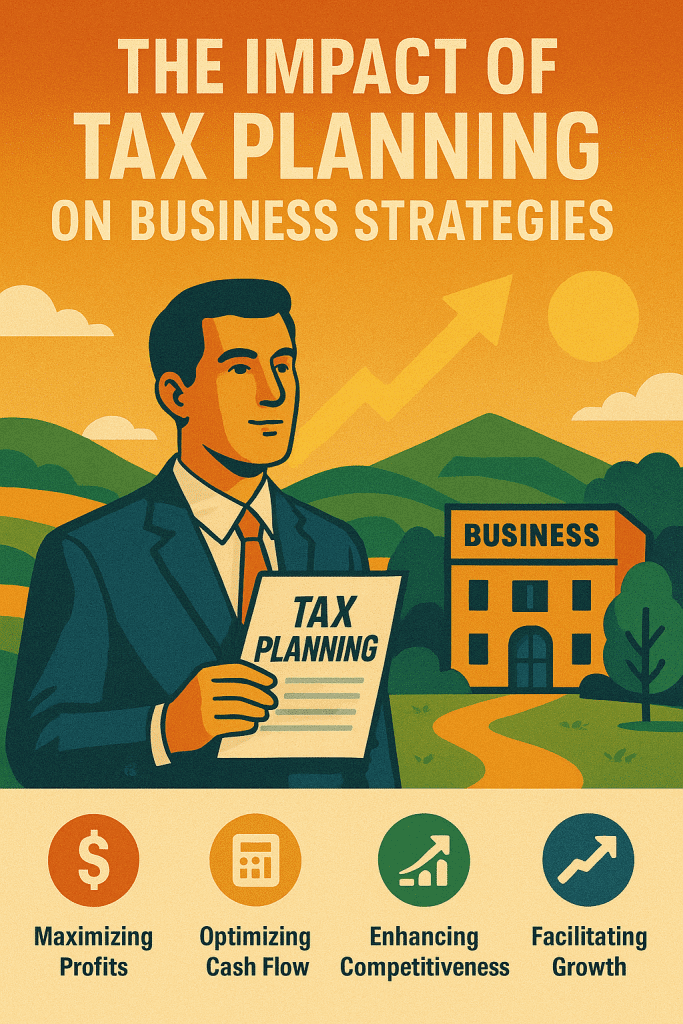
Growing a business requires constant investment in new opportunities. Tax planning provides the fuel for this growth by keeping more money in the business instead of sending it to the government.
Reinvestment Multiplier Effect
When businesses save money through smart tax planning, they create a multiplier effect. The money saved is reinvested in the business, generating more income, which in turn creates additional opportunities for tax savings. This cycle enables successful businesses to grow significantly faster than those that overlook tax planning.
A technology startup that saved $200,000 through proper tax planning used that money to hire three new developers. Those developers created a product that generated $2 million in new revenue the following year. Without the initial tax savings, the startup would not have had the cash to make those strategic hires.
Market Expansion Opportunities
Tax planning becomes even more important when businesses expand into new markets or states. Different locations have different tax rules, incentives, and costs. Smart business owners research these differences before expanding and choose locations that offer the best tax advantages for their type of business.
Some states offer special tax breaks for manufacturers, while others favor technology companies or businesses in renewable energy. Understanding these opportunities can save hundreds of thousands of dollars and make expansion much more profitable.
Entity Structure Strategy and Business Planning
The legal structure of your business has a huge impact on both taxes and business strategy. Many business owners stick with their original structure even when it no longer makes sense as the business grows and changes.
Evolution of Business Structures
As businesses grow from small startups to larger companies, their optimal tax structure often changes. A sole proprietorship that made sense at the beginning might cost thousands in extra taxes as income increases. An LLC that worked well for a service business might not be ideal when the company starts manufacturing products.
The key is to review the business structure regularly and make changes when they benefit the business strategy. This might involve changing from an LLC to an S-Corporation to reduce self-employment taxes, or from an S-Corp to a C-Corp to attract investors.
Strategic Business Structure Planning
Forward-thinking business owners opt for structures that support their long-term objectives, not just their current circumstances. If you plan to sell the business someday, certain structures make that easier and more tax-efficient. If you want to attract investors, other structures may work better.
The right business structure can save 10-20% in annual taxes while also supporting strategic business goals, such as attracting investment or planning for succession.
Mergers and Acquisitions Tax Strategy
When businesses buy or sell other companies, tax planning becomes critical to success. Poor tax planning can result in millions of dollars in unnecessary taxes or even kill deals entirely. Smart tax planning can make deals more profitable and help businesses grow through acquisitions.
Deal Structure Optimization
The way you structure a merger or acquisition determines how much tax is paid by everyone involved. Smart tax planning can often save both buyers and sellers significant amounts of money, making deals more attractive to both parties. This includes determining whether to structure deals as asset purchases or stock purchases, how to account for depreciation, and when to recognize gains or losses.
A manufacturing company that bought a competitor saved $3 million in taxes by structuring the deal as an asset purchase rather than a stock purchase. This allowed them to write off the equipment purchases faster and reduce their tax bill for years to come.
Integration Planning
After completing a merger or acquisition, the way you integrate the companies affects taxes for years. This includes combining accounting systems, harmonizing employee benefits, and optimizing the overall structure of the combined business. Companies that plan this integration properly often save 15-25% more in taxes than those that handle it poorly.
International Business Strategy and Tax Planning
Businesses operating in multiple countries face complex tax challenges that can significantly impact their international expansion. Effective international tax planning enables businesses to compete globally while minimizing double taxation and ensuring compliance.
Cross-Border Planning
When businesses expand internationally, they must navigate tax rules in multiple countries while avoiding double taxation on the same income. This requires understanding tax treaties, transfer pricing rules, and foreign tax credits. Companies that get this right can expand profitably, while those who ignore it often lose money on international operations.
Global Competitive Advantage
International tax planning enables businesses to compete globally by minimizing their total tax burden across all countries in which they operate. This may involve selecting the appropriate countries for various operations, structuring international transactions effectively, or leveraging tax incentives for international business.
Technology and Innovation Tax Strategies
Modern businesses increasingly rely on technology and innovation to compete. Tax planning supports these strategies through research and development credits, technology depreciation benefits, and other incentives designed to encourage innovation.
Research and Development Benefits
Businesses that invest in developing new products, processes, or technologies can often claim special tax credits for these activities. These credits can be worth 20% or more of qualified research expenses, making innovation much more affordable.
A software company that spent $500,000 developing a new product claimed $100,000 in research and development tax credits. This made the development project much more profitable and encouraged the company to invest in more innovation.
Technology Investment Strategy
Tax planning also helps businesses make smart decisions about technology investments. This includes timing software purchases, deciding between buying and leasing equipment, and structuring technology partnerships to maximize tax benefits.
Risk Management Through Tax Planning
Good tax planning also helps businesses manage risks and prepare for uncertain times. This includes building cash reserves through tax savings, structuring operations to minimize audit risk, and developing flexible strategies that adapt to various economic conditions.
Audit Protection Strategy
Businesses with effective tax planning are less likely to be audited and better prepared if an audit occurs. This includes maintaining proper documentation, adhering to consistent practices, and collaborating with qualified professionals. Companies with strong tax compliance have audit rates that are 40% lower than the average.
Economic Uncertainty Planning
Tax planning helps businesses prepare for economic fluctuations by creating flexible strategies that work in various conditions. This might include deferring income in good years and accelerating deductions in tough years, or structuring operations to capitalize on economic incentives during recessions.
Tax Planning vs. Tax Compliance: Strategic Comparison
| Aspect | Tax Planning (Strategic) | Tax Compliance (Basic) |
|---|---|---|
| Focus | Business strategy optimization | Meeting minimum requirements |
| Timing | Year-round strategic decisions | Annual filing only |
| Business Impact | Drives growth and competitive advantage | Avoids penalties |
| Cost Savings | 15-30% more savings through strategy | Basic deductions only |
| Decision Making | Informs all major business choices | Reactive to completed transactions |
| Long-term Value | Builds sustainable competitive advantage | Maintains basic compliance |
A retail chain switched from basic tax compliance to strategic tax planning and saved an additional $150,000 in the first year while also making better decisions about store locations and inventory management.
Building Tax Planning Into Business Culture
The most successful businesses make tax planning part of their company culture, not just something the accounting department handles. This involves training key employees to understand tax implications, including tax considerations in business planning meetings, and establishing tax efficiency as a company-wide goal.
Employee Training and Awareness
When employees understand how their decisions affect taxes, they make choices that benefit the whole company. This includes sales teams that understand the tax implications of different contract structures, purchasing managers who are aware of depreciation timing, and executives who consider tax impact in their strategic decisions.
Integrated Planning Process
Leading companies integrate tax planning into their regular business planning process. This means considering tax implications when setting budgets, evaluating new opportunities, and making major business decisions. Companies that do this report 25% better financial performance than those that handle taxes separately.
Conclusion
Tax planning is not just about reducing tax bills – it is a powerful business tool that drives strategy, improves competitive position, and fuels growth. Businesses that understand this connection between tax planning and business strategy consistently outperform those that treat taxes as a separate issue.
The companies that thrive in today’s competitive market are those that integrate smart tax planning into every aspect of their business strategy, creating sustainable advantages that compound over time. Whether you are planning for growth, considering acquisitions, expanding internationally, or simply trying to compete more effectively, tax planning should be at the center of your strategic thinking.
Begin by evaluating how tax considerations can enhance your current business decisions. Collaborate with qualified professionals who possess a deep understanding of both tax law and business strategy. Most importantly, stop thinking of taxes as just a cost and start seeing them as a strategic opportunity to build a stronger, more competitive business.
The Impact of Tax Planning on Business Strategies FAQs
How does tax planning actually change business strategy decisions?
Tax planning changes business strategy by providing additional cash flow through savings that can be reinvested in growth opportunities, competitive advantages, and operational improvements. Companies with strategic tax planning typically have 20-40% more working capital available for strategic initiatives compared to those that only focus on basic compliance.
What is the difference between tax planning and regular tax preparation for business strategy?
Tax planning is a year-round strategic process that influences major business decisions and drives competitive advantage, while regular tax preparation is simply meeting annual filing requirements. Strategic tax planning can provide savings of 15-30% and directly supports business growth goals.
How much can strategic tax planning impact a company’s competitive position?
Strategic tax planning can significantly improve a competitive position by reducing operating costs and freeing up capital for reinvestment. Companies that integrate tax strategy with business planning often save enough to fund major competitive advantages, such as better equipment, expanded marketing, or lower customer prices.
When should businesses integrate tax planning into their strategic planning process?
Businesses should integrate tax planning into their strategic planning from the outset and review it quarterly as part of their regular business planning cycles. The earlier tax considerations are included in strategic decisions, the more opportunities exist to optimize both tax savings and business outcomes.
How does tax planning support business growth and expansion strategies?
Tax planning supports growth by maximizing cash flow available for reinvestment, optimizing the tax efficiency of expansion decisions, and helping businesses choose the most advantageous structures and locations for growth. Companies with strategic tax planning are 60% more likely to successfully complete major growth initiatives, such as mergers and acquisitions.

Paul Kohn MBA is a seasoned business consultant known for helping businesses maximize tax credits and incentives to fuel growth and profitability. He holds a Master’s in Business Administration and has helped numerous companies secure millions in tax credits and implement effective business strategies. He is regarded as a trusted authority for business owners seeking to optimize their savings and growth.