

Key Takeaways
- Federal and state tax credits can reduce hiring costs by $2,400 to $9,600 per employee
- The Work Opportunity Tax Credit (WOTC) covers up to 40% of first-year wages for qualifying hires
- Research and Development tax credits can fund specialized technical positions
- Small businesses can claim immediate deductions for employee training expenses
- Strategic timing of hires can maximize tax benefits and cash flow improvements
Tax incentives can significantly reduce the cost of hiring new employees, with businesses typically saving $2,400 to $9,600 per qualifying hire through federal programs, such as the Work Opportunity Tax Credit, and various state-specific incentives.
| Tax Incentive | Maximum Benefit | Best For | Processing Time |
|---|---|---|---|
| Work Opportunity Tax Credit (WOTC) | $9,600 per employee | Hiring from targeted groups | Pre-screening required |
| R&D Tax Credit | Up to 20% of qualified wages | Technical and innovation roles | Annual filing |
| State-Specific Credits | Varies by location | Local job creation | State-dependent |
| Training Expense Deduction | 100% of training costs | Skill development programs | Immediate |
Federal Tax Credits That Fund New Employee Hiring
The federal government offers several powerful tax incentives designed to encourage businesses to hire new employees, with the most significant being the Work Opportunity Tax Credit. This program represents one of the most direct ways businesses can offset hiring costs while contributing to economic growth and community development.
Work Opportunity Tax Credit: Your Primary Hiring Incentive
The Work Opportunity Tax Credit can reduce your tax liability by up to $9,600 per qualifying employee, making it the most valuable federal incentive for businesses looking to expand their workforce. This credit applies to wages paid to individuals from specific target groups, including veterans, ex-felons, recipients of government assistance, and long-term unemployed individuals. The credit equals 25% to 40% of qualified first-year wages, depending on the target group and the number of hours worked. To qualify, employers must obtain certification from their state workforce agency before the employee begins work, making advance planning essential for maximizing this benefit.
Research and Development Tax Credits for Specialized Hires
When you hire new employees for research and development activities, the federal R&D tax credit can offset up to 20% of qualified wages and associated costs. This incentive is particularly valuable for businesses in technology, manufacturing, and innovation-driven industries. The credit covers not only salaries but also training costs, equipment, and contractor expenses related to the development of new products, processes, or software. Small businesses with gross receipts under $5 million annually can even apply R&D credits against payroll taxes, providing immediate cash flow benefits rather than waiting for income tax reductions.

State and Local Incentives to Hire New Employees
State and local governments frequently offer additional tax incentives that can stack with federal benefits, creating compound savings for businesses expanding their workforce. These programs vary significantly by location but often provide the most generous benefits for businesses willing to commit to long-term job creation in specific geographic areas.
Enterprise Zone and Economic Development Credits
Many states designate specific geographic areas as enterprise zones or economic development districts, offering enhanced tax credits for businesses that hire new employees within these boundaries. These credits typically range from $1,000 to $5,000 per employee per year and may be extended for multiple years. States like California, New York, and Texas offer particularly robust programs that can significantly reduce state income tax liability. The key to maximizing these benefits lies in understanding the specific requirements for each zone, including minimum wage thresholds, employee residence requirements, and job retention commitments.
Industry-Specific State Hiring Incentives
Targeted industries such as manufacturing, technology, and renewable energy often qualify for specialized state tax credits when adding new positions. These industry-focused incentives recognize the economic impact of specific sectors and typically offer higher credit amounts than general hiring programs. For example, manufacturing companies in many states can claim credits of $2,000 to $4,000 per production worker, while technology companies may receive credits based on salary levels or specialized skill requirements. A software company in Georgia recently utilized the state’s technology tax credit to offset $18,000 in tax liability when hiring six new developers, effectively reducing their hiring costs by 15%.
Maximizing Tax Benefits When You Hire New Employees
Strategic planning and proper timing can significantly amplify the tax benefits available when expanding your workforce. Understanding the interplay between different incentive programs and your business’s specific circumstances enables you to structure hiring decisions for maximum financial impact.
Strategic Timing and Documentation Requirements
Proper documentation and timing can increase your total tax benefits by 30% or more compared to businesses that don’t plan their hiring strategy around available incentives. Many tax credits require pre-certification or specific documentation before employees begin work, making advance planning crucial. The Work Opportunity Tax Credit, for instance, requires employers to submit Form 8850 to their state workforce agency within 28 days of the employee’s start date. Similarly, many state programs have application deadlines that must be met before hiring begins. Creating a systematic approach to identifying potential credit-eligible candidates during your recruitment process ensures you don’t miss valuable opportunities.
Combining Multiple Incentive Programs
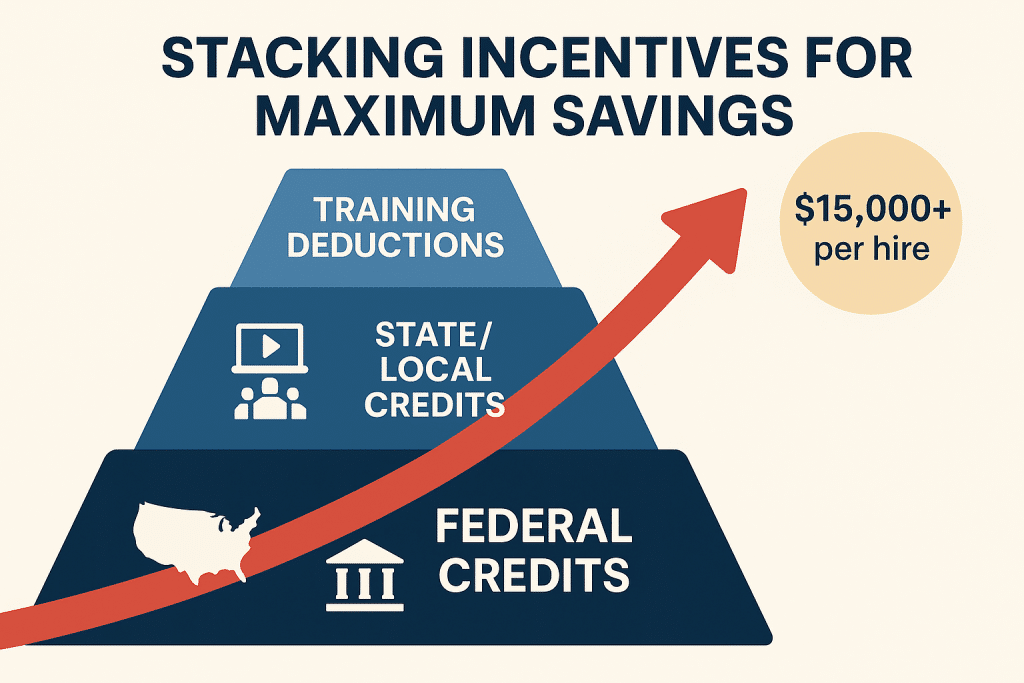
The most significant tax savings occur when businesses successfully combine federal, state, and local incentive programs for the same employees. This stacking approach can reduce the effective cost of hiring by 25% to 40% in optimal scenarios. For example, a manufacturing company hiring a veteran in an enterprise zone could potentially claim the federal WOTC, state manufacturing credit, and local economic development incentive for the same position. However, some programs have restrictions on combining benefits, making it essential to understand the specific rules governing each incentive. Working with a qualified tax professional helps ensure compliance while maximizing total benefits.
| Strategy | Immediate Benefits | Long-term Benefits | Best for Business Size |
|---|---|---|---|
| WOTC Focus | Quick tax reduction | Workforce diversity | All sizes |
| R&D Credit Strategy | Payroll tax offset | Innovation capacity | Small to medium |
| Geographic Targeting | Multiple credits | Community relationships | Location-flexible |
| Training Integration | Immediate deduction | Skilled workforce | Growing companies |
Implementation Steps for Tax-Incentive Hiring
Successfully leveraging tax incentives requires a systematic approach that integrates credit opportunities into your existing hiring processes. This implementation strategy ensures you capture available benefits while maintaining efficient recruitment and onboarding procedures.
Pre-Hire Assessment and Planning
Before posting job openings, conduct a comprehensive assessment of available tax incentives in your area and industry. This involves researching federal programs like WOTC, identifying applicable state and local credits, and understanding the specific requirements for each program. Create a checklist of qualification criteria and required documentation to streamline the process when suitable candidates emerge. Many businesses find success by partnering with workforce development agencies, which can help identify pre-qualified candidates and assist with the certification process. A logistics company in Ohio increased their tax credit success rate from 15% to 65% by establishing relationships with local veteran service organizations and unemployment offices.
Integration with Hiring and Payroll Systems
Businesses that integrate tax credit processes with their existing HR systems see 40% higher success rates in claiming available incentives. This integration involves training hiring managers to recognize potentially qualifying candidates, establishing workflows for required documentation, and coordinating with payroll systems to track qualified wages accurately. Modern payroll software often includes modules specifically designed to track tax credit eligibility and calculate benefits, making administration more manageable. The key is establishing these processes before you need them, ensuring smooth execution when hiring opportunities arise.
Tax incentives transform the economics of hiring new employees from a cost burden into a strategic investment opportunity. By understanding and leveraging these programs effectively, businesses can reduce hiring costs, improve cash flow, and build stronger teams while contributing to broader economic development goals. The combination of federal credits like WOTC, state-specific incentives, and strategic timing can make previously unaffordable hiring decisions not only feasible but financially advantageous.
Hire New Employees FAQs
What is the maximum tax credit I can claim when I hire new employees?
The maximum tax credit when you hire new employees is $9,600 per qualifying worker through the Work Opportunity Tax Credit (WOTC). This credit can be combined with state and local incentives to potentially reduce hiring costs by 25-40% in optimal scenarios.
Do small businesses qualify for the same tax credits as large corporations when hiring?
Yes, small businesses qualify for the same federal tax credits when they hire new employees, and many programs specifically benefit smaller companies. Small businesses with under $5 million in gross receipts can apply R&D credits against payroll taxes for immediate cash flow benefits.
How long do I have to apply for tax credits after hiring new employees?
You must apply for the Work Opportunity Tax Credit within 28 days of the employee’s start date by submitting Form 8850 to your state workforce agency. Other programs have varying deadlines, making advance planning essential for maximizing benefits.
Can I combine multiple tax incentives for the same employee hire?
Yes, you can often combine federal, state, and local tax incentives for the same employee hire, though some programs have restrictions. Proper coordination can increase total tax benefits by 30% or more compared to claiming single credits.
What documentation do I need to claim tax credits for hiring new employees?
Documentation requirements vary by program but typically include employee eligibility certification, wage records, and timely applications to relevant agencies. The WOTC requires pre-certification from state workforce agencies, while other programs may allow post-hire applications with proper documentation.