
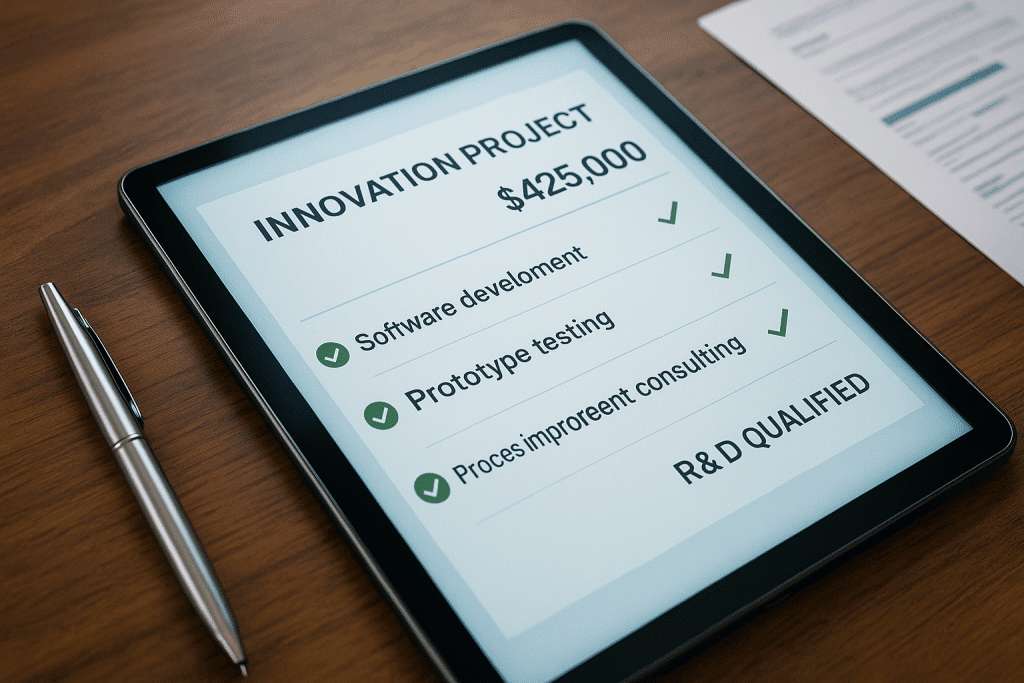
The R&D tax credit has become one of the most powerful tools for American businesses to save money while investing in innovation. With the passage of the One Big Beautiful Bill Act on July 4, 2025, companies nationwide can now claim immediate tax benefits for their research and development expenses. This groundbreaking legislation eliminates the five-year waiting period that previously limited business cash flow, creating new opportunities for companies to grow, hire more employees, and develop cutting-edge products and services.
Understanding the R&D Tax Credit Revolution
The R&D tax credit represents one of the most significant changes to American tax policy in recent years. This federal program rewards businesses that invest in research and development activities by providing substantial tax savings. Before the One Big Beautiful Bill, companies faced significant challenges in accessing these benefits due to complex amortization requirements that forced them to spread deductions over multiple years.
The new legislation streamlines the process for businesses to claim R&D tax credit benefits by eliminating the burdensome five-year amortization schedule. Companies can now deduct the full amount of their qualifying research expenses in the same tax year they incur these costs. This change provides immediate relief to business cash flow and encourages continued investment in innovation across all industries.
Small businesses and startups, in particular, benefit from these R&D tax credit improvements because they often operate with limited working capital. The ability to claim immediate deductions allows these companies to reduce their current tax liability and reinvest those savings in additional research projects, employee compensation, or business expansion initiatives.
| Benefit Type | Old System | New System |
|---|---|---|
| Deduction Timing | Spread over 5 years | 100% immediate deduction |
| Cash Flow Impact | Limited yearly benefit | Full benefit in year of expense |
| Retroactive Benefits | No catch-up provisions | Accelerated deductions for 2022-2024 |
| Small Business Impact | Delayed tax savings | Immediate working capital boost |
How the One Big Beautiful Bill Transforms R&D Tax Credit Benefits
The One Big Beautiful Bill represents a historic shift in federal tax policy that prioritizes American innovation and competitiveness. This comprehensive legislation acknowledges that businesses require prompt access to R&D tax credit benefits to maintain their competitive edge in global markets. The bill specifically addresses the challenges created by the Tax Cuts and Jobs Act of 2017, which introduced problematic amortization requirements effective in 2022.
Under the new law, businesses can revert to the pre-2022 system, where research and development expenses qualify for an immediate deduction. This change applies to all qualifying research activities conducted within the United States, providing a significant incentive for companies to maintain their research operations domestically rather than moving them overseas.
The legislation also includes special provisions for companies that have been operating under the amortization system since 2022. These businesses can accelerate their remaining deductions from previous years, creating substantial tax savings opportunities that can be claimed immediately rather than waiting for future tax years.
Immediate Expensing Provisions
The immediate expensing provision represents the cornerstone of the One Big Beautiful Bill’s approach to R&D tax credit reform. This provision allows businesses to deduct 100% of their qualifying research expenses in the year they are incurred, eliminating the complex calculation requirements of the previous amortization system. Companies no longer need to track and spread these deductions over multiple years, which significantly simplifies their tax compliance processes.
This immediate expensing benefit applies to a wide range of research activities, including product development, process improvement, software creation, and technical innovation projects. The provision covers employee wages, supply costs, contractor expenses, and equipment costs directly related to qualifying research activities conducted within the United States.

Retroactive Relief Opportunities
The One Big Beautiful Bill includes retroactive relief provisions that allow businesses to recapture some of the benefits they lost during the amortization period from 2022 to 2024. Companies can file amended tax returns to accelerate their remaining deductions from previous years, potentially generating substantial refunds or reducing their current-year tax liabilities.
This retroactive relief recognizes that many businesses suffered cash flow challenges during the amortization period and provides a mechanism to restore some of the financial flexibility they lost. The accelerated deduction provisions can be particularly valuable for companies that made significant research investments during this period but were unable to claim the full tax benefits immediately.
Qualifying Activities for Maximum R&D Tax Credit Benefits
The R&D tax credit system uses a comprehensive framework to determine which business activities qualify for tax benefits under the One Big Beautiful Bill. This framework, known as the four-part test, ensures that only genuine research and development activities receive credit benefits while excluding routine business operations that do not involve technical innovation or uncertainty.
Qualifying activities must involve the development of new or improved business components, rely on principles of engineering, computer science, physical sciences, or biological sciences, aim to eliminate technical uncertainty, and follow a process of experimentation and testing. These requirements ensure that the R&D tax credit supports genuine innovation rather than routine business improvements or maintenance activities.
The scope of qualifying activities extends far beyond traditional laboratory research to include software development, manufacturing process improvements, product design innovations, and technical problem-solving activities across virtually every industry. This broad definition means that many businesses engage in qualifying research without realizing they may be eligible to claim R&D tax credit benefits.
| Industry Sector | Typical Qualifying Activities | Example Projects |
|---|---|---|
| Software Development | Creating new algorithms, improving performance, developing features | Mobile apps, cloud platforms, AI systems |
| Manufacturing | Process optimization, product design, quality improvements | Automation systems, new materials, production efficiency |
| Healthcare | Medical device development, treatment protocols, diagnostic tools | Drug discovery, medical equipment, patient care systems |
| Energy | Renewable technology, efficiency improvements, storage solutions | Solar panels, wind turbines, battery technology |
Technical Innovation Requirements
Technical innovation serves as the foundation for R&D tax credit qualification under the enhanced provisions of the One Big Beautiful Bill in 2025. Companies must demonstrate that their research activities involve genuine attempts to advance the state of technology within their field, rather than merely adapting existing solutions to new applications. This requirement ensures that the credit supports activities that contribute to overall technological progress and economic growth.
The technical innovation requirement encompasses both breakthrough discoveries and incremental improvements that require systematic experimentation and evaluation. Companies developing entirely new products qualify alongside those making significant improvements to existing products, processes, or techniques. The key factor is whether the work involves technical uncertainty that cannot be resolved through routine engineering or established scientific methods.
Documentation and Compliance Standards
Proper documentation becomes even more critical under the One Big Beautiful Bill because companies can now claim larger immediate deductions that may attract greater scrutiny during tax examinations. Businesses must maintain detailed records that demonstrate how their activities qualify for R&D tax credit benefits and support their claimed expense amounts.
Essential documentation includes project descriptions that explain technical objectives and uncertainties, detailed time tracking records showing employee involvement in qualifying activities, expense receipts and allocation methods connecting costs to specific research projects, and technical documentation such as test results, prototypes, and failure analyses that demonstrate the experimental nature of the work.
Maximizing Your R&D Tax Credit Savings Strategy
The enhanced R&D tax credit landscape created by the One Big Beautiful Bill requires businesses to develop comprehensive strategies for identifying and claiming all available benefits. Companies should conduct thorough reviews of their operations to identify previously overlooked qualifying activities and ensure they capture the full value of their research investments through proper credit claims.
Strategic planning becomes particularly important because the immediate expensing provisions can create substantial current-year deductions that may exceed a company’s current tax liability. Businesses need to understand how to optimize the timing of their research activities and coordinate R&D tax credit benefits with other available tax incentives to maximize their overall tax savings.
The retroactive relief provisions also require careful analysis to determine the optimal approach for claiming accelerated deductions from the 2022-2024 period. Companies may need to file amended returns or make elections on their current year returns to capture these benefits, and the chosen approach can significantly impact the timing and amount of tax savings realized.
Cross-Functional Collaboration for Credit Identification
Maximizing R&D tax credit benefits requires collaboration between technical teams, financial personnel, and tax professionals to ensure comprehensive identification of qualifying activities. Many companies miss significant credit opportunities because qualifying research occurs outside traditional research and development departments or involves activities that employees do not recognize as research.
Engineering departments often engage in qualifying activities when troubleshooting production issues, customizing products for specific customers, or improving manufacturing processes. Software developers frequently qualify when they create new functionality, optimize performance, or integrate complex systems. Even service companies may be eligible when they develop proprietary methodologies or innovative service delivery approaches.
Integration with Business Planning
The improved R&D tax credit benefits should influence business planning and investment decisions, as the immediate deduction provisions significantly enhance the return on investment for research activities. Companies can now factor the immediate tax savings into their project evaluations, potentially making previously marginal projects financially viable.
Strategic timing of research activities can also optimize tax benefits, particularly for companies with variable income levels or those planning significant business transactions. The ability to claim immediate deductions provides flexibility in managing taxable income and can support broader tax planning strategies that consider multiple years and various types of business activities.
Industry-Specific R&D Tax Credit Opportunities
Different industries present unique opportunities for R&D tax credit claims under the enhanced provisions of the One Big Beautiful Bill. Manufacturing companies often undertake extensive qualifying activities related to process improvements, product development, and quality enhancement initiatives, which can generate substantial credit benefits when properly identified and documented.
Technology companies often qualify for significant R&D tax credit benefits through projects involving software development, system integration, and digital innovation. The immediate expensing provisions particularly benefit these companies because their research activities often involve substantial labor costs and rapid development cycles that can generate large current-year deductions.
Service industries increasingly qualify for R&D tax credit benefits as they develop technology-driven solutions and innovative approaches to customer service. Financial services firms, healthcare providers, and professional services companies all engage in qualifying research when they develop proprietary systems, create new service methodologies, or implement innovative approaches to address business challenges.
Manufacturing Innovation Initiatives
Manufacturing companies discover numerous R&D tax credit opportunities in their ongoing efforts to enhance production efficiency, improve product quality, and lower operational costs. The One Big Beautiful Bill makes these activities more financially attractive by providing immediate tax benefits that can be reinvested in additional improvement projects or facility upgrades.
Common qualifying activities in manufacturing include developing new production techniques, creating custom tooling and fixtures, implementing automation systems, and improving quality control processes. Companies engaged in food production, automotive manufacturing, electronics assembly, and chemical processing frequently conduct qualifying research that supports significant R&D tax credit claims.
Technology and Software Development
Technology companies are among the largest beneficiaries of R&D tax credit programs, as their core business activities often involve qualifying research and development work. Software development, algorithm creation, system architecture design, and cybersecurity enhancement all typically qualify for credit benefits when they involve technical uncertainty and experimental approaches.
The immediate expensing provisions of the One Big Beautiful Bill particularly benefit technology companies because they often have high labor costs and rapid development cycles. These companies can now claim immediate deductions for their substantial research investments, improving cash flow and enabling continued investment in innovation and talent acquisition.
Common Mistakes That Reduce R&D Tax Credit Benefits
Many businesses inadvertently reduce their R&D tax credit benefits by failing to properly identify qualifying activities or maintain adequate documentation to support their claims. The enhanced benefits available under the One Big Beautiful Bill make it even more important to avoid these common mistakes that can result in lost tax savings or complications during examinations.
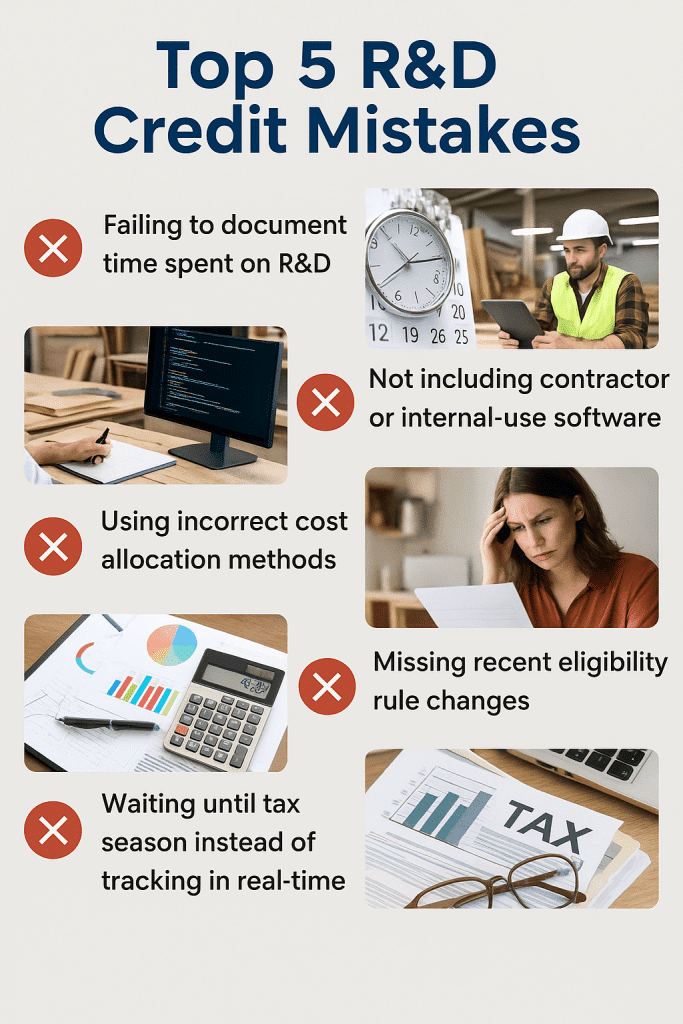
One frequent mistake involves taking a too narrow view of qualifying activities, focusing only on obvious research projects while overlooking routine improvement activities that involve technical uncertainty and experimentation. Companies often miss opportunities in areas such as software customization, process optimization, and problem-solving activities that meet all the technical requirements for R&D tax credit qualification.
Documentation failures represent another significant threat to R&D tax credit benefits because the immediate expensing provisions can create larger deductions that attract greater scrutiny. Companies must maintain contemporaneous records that demonstrate the qualifying nature of their activities and support the expense amounts claimed on their tax returns.
Activity Misclassification Issues
Proper classification of business activities requires careful analysis of whether each project involves genuine technical uncertainty and follows a process of experimentation. Companies sometimes include routine maintenance, quality assurance testing, or market research activities that do not qualify for R&D tax credit benefits, potentially triggering examinations that could affect their entire credit claim.
Activities that adapt existing technology to new applications typically do not qualify unless they involve significant technical challenges and uncertainty about achieving the desired results. Similarly, activities that address business uncertainties rather than technical uncertainties fall outside the scope of qualifying research, regardless of their complexity or cost.
Financial Tracking and Allocation Errors
Accurate expense tracking and allocation become even more critical under the One Big Beautiful Bill because companies can claim larger immediate deductions that require strong supporting documentation. Common errors include inadequate time-tracking systems, poor expense allocation methods, and failure to distinguish between qualifying research costs and routine business expenses.
Companies must implement robust tracking systems that capture sufficient detail to support their R&D tax credit claims while remaining practical for daily operations. This often requires specialized software solutions and employee training to ensure consistent and accurate record-keeping throughout the research process.
Future Planning Under Enhanced R&D Tax Credit Rules
The One Big Beautiful Bill creates a new landscape for research and development planning that businesses should incorporate into their strategic decision-making processes. The immediate deduction provisions improve the financial returns on research investments and should influence how companies evaluate and prioritize their innovation initiatives.
Long-term planning should consider how the enhanced R&D tax credit benefits interact with other business objectives such as talent acquisition, facility expansion, and market development. Companies can now factor immediate tax savings into their project evaluations, potentially enabling more aggressive research agendas and faster innovation cycles.
The stability provided by the One Big Beautiful Bill also enables better multi-year planning, as companies can rely on consistent tax treatment for their research investments, rather than worrying about changing regulations or sunset provisions that could affect their long-term strategies.
| Planning Element | Key Considerations | Action Items |
|---|---|---|
| Project Evaluation | Include immediate tax savings in ROI calculations | Update financial models, reassess marginal projects |
| Resource Allocation | Optimize timing of research activities | Coordinate with tax planning, consider cash flow impact |
| Documentation Systems | Implement robust tracking and record-keeping | Invest in software, train employees, establish procedures |
| Compliance Management | Prepare for potential examinations | Maintain detailed records, engage tax professionals |
Investment Strategy Optimization
The enhanced R&D tax credit benefits should influence how companies approach their research and development investment strategies because the immediate deduction provisions significantly improve project economics. Companies can now pursue more ambitious research agendas knowing that they will receive immediate tax benefits that can be reinvested in additional innovation activities.
Strategic timing of research activities can optimize tax benefits, particularly for companies with variable income levels or those planning business transactions that may impact their tax situation. The flexibility provided by immediate expensing enables companies to accelerate or defer research activities in accordance with their overall tax planning strategies.
Organizational Development and Talent Strategy
The improved economics of research activities under the One Big Beautiful Bill can support enhanced talent acquisition and retention strategies because companies can afford to invest more in research personnel knowing that these costs generate immediate tax benefits. This creates opportunities to build stronger research teams and attract top talent in competitive markets.
Companies should also consider how the enhanced R&D tax credit benefits can support training and development programs that build internal research capabilities. Investments in employee education and skill development often qualify for credit benefits when they directly support qualifying research activities and technical innovation initiatives.
Conclusion
The One Big Beautiful Bill represents a transformative moment for American businesses seeking to maximize their R&D tax credit benefits while investing in innovation and growth. By eliminating the burdensome five-year amortization requirement and restoring immediate expensing for research and development activities, this legislation provides companies with the cash flow relief and tax savings they need to compete effectively in global markets. The enhanced R&D tax credit system rewards businesses that commit to technical innovation while simplifying compliance requirements and reducing administrative burdens.
Companies that understand and implement these new provisions can capture significant tax savings that can be reinvested in additional research activities, talent acquisition, and business expansion initiatives. The legislation’s retroactive provisions also provide immediate relief for businesses that have been operating under the previous amortization system, creating opportunities for substantial current-year tax savings through accelerated deductions.
As businesses adapt to this new landscape, those that develop comprehensive strategies for identifying qualifying activities, maintaining proper documentation, and optimizing their research investments will gain significant competitive advantages through enhanced cash flow and reduced tax burdens.
R&D Tax Credit FAQs
What types of businesses can claim the R&D tax credit under the One Big Beautiful Bill?
Businesses across virtually all industries can claim the R&D tax credit under the One Big Beautiful Bill if they engage in qualifying research activities that involve technical uncertainty and experimentation. This includes manufacturing companies, software developers, healthcare providers, engineering firms, and many service businesses that develop innovative solutions to technical challenges.
How does the immediate expensing provision affect small businesses and startups?
The immediate expensing provision particularly benefits small businesses and startups by providing immediate cash flow relief through current-year tax deductions rather than forcing them to wait five years to claim full benefits. Small businesses can also potentially apply R&D tax credits against payroll taxes if they meet certain eligibility requirements and have limited income tax liability.
Can companies claim R&D tax credits for software development activities?
Yes, companies can claim R&D tax credits for software development activities that involve creating new functionality, solving technical challenges, or developing innovative solutions that require experimentation and technical uncertainty resolution. Routine maintenance, minor updates, and adaptation of existing software typically do not qualify for credit benefits.
What documentation is required to support R&D tax credit claims?
Companies must maintain detailed documentation including project descriptions explaining technical objectives and uncertainties, time tracking records showing employee involvement in qualifying activities, expense receipts connecting costs to specific research projects, and technical documentation demonstrating the experimental nature of the work. This documentation must be maintained for at least four years and should be created contemporaneously with the research activities.
How can businesses claim retroactive benefits for research expenses from 2022-2024?
Businesses can claim retroactive benefits for research expenses from 2022-2024 by filing amended tax returns to accelerate remaining deductions from the amortization period or making elections on current-year returns as permitted under the One Big Beautiful Bill. Companies should consult with tax professionals to determine the optimal approach for their specific situation and maximize their available benefits.