

Key Takeaways
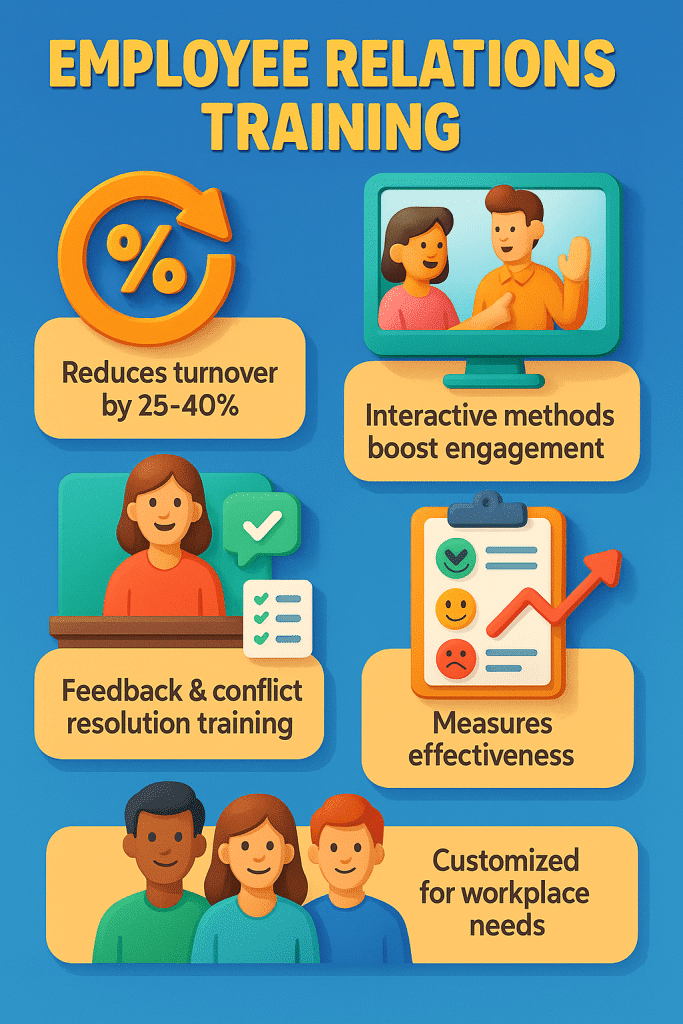
- Employee relations training reduces turnover by 25-40% when implemented with clear communication strategies
- Interactive training methods increase engagement and retention more than traditional lecture-style programs
- Regular feedback sessions and conflict resolution training create positive workplace cultures
- Measuring training effectiveness through employee surveys and retention metrics ensures continuous improvement
- Customized training programs addressing specific workplace challenges deliver better results than generic approaches
Employee relations training enhances workplace retention by fostering effective communication skills, conflict resolution abilities, and positive team dynamics, ultimately creating supportive work environments where employees want to stay and advance their careers.
Building Effective Employee Relations Training Programs
Employee relations training forms the foundation of successful workplace cultures that retain top talent while reducing costly turnover and workplace conflicts. Effective programs go beyond basic policy training to develop genuine interpersonal skills that help managers and employees navigate complex workplace relationships with confidence and professionalism.
The most successful employee relations training programs combine theoretical knowledge with practical application through role-playing exercises, case study analysis, and real-world problem-solving scenarios. This hands-on approach ensures that participants can immediately apply their learning to actual workplace situations, creating lasting behavioral changes that improve overall team dynamics and job satisfaction.

Core Components of Successful Training
Effective employee relations training must address communication fundamentals, conflict resolution techniques, and emotional intelligence development as interconnected skills that support positive workplace relationships. Communication training focuses on active listening, clear expression of ideas, and understanding different communication styles that exist within diverse teams.
Conflict resolution components teach participants how to identify early warning signs of workplace disputes, facilitate productive conversations between conflicting parties, and develop win-win solutions that preserve working relationships. These skills prove particularly valuable for managers and team leaders who regularly mediate between different personalities and work styles within their departments.
Training Delivery Methods and Engagement Strategies
Modern employee relations training utilizes multiple delivery methods to cater to diverse learning styles and enhance participant engagement throughout the program. Interactive workshops, online modules, peer mentoring, and group discussions create varied learning experiences that maintain interest while reinforcing key concepts through repetition and practice.
Blended learning approaches that combine in-person interaction with digital resources increase training completion rates by 60% compared to single-method programs. This variety helps accommodate busy work schedules while ensuring that all participants receive comprehensive exposure to essential employee relations concepts and practical application opportunities.
| Training Component | Delivery Method | Duration | Key Benefits |
|---|---|---|---|
| Communication Skills | Interactive workshops | 4-6 hours | Immediate practice, peer feedback |
| Conflict Resolution | Role-playing scenarios | 3-4 hours | Realistic problem-solving experience |
| Policy Understanding | Online modules | 2-3 hours | Self-paced learning, easy updates |
| Emotional Intelligence | Group discussions | 2-3 hours | Shared experiences, team building |
Designing Employee Relations Training for Maximum Retention Impact
Strategic employee relations training design focuses on addressing the specific retention challenges that affect each organization, rather than implementing generic programs that may not address actual workplace issues. This customized approach requires analyzing exit interview data, employee survey results, and workplace incident reports to identify the most critical areas for improvement.
Retention-focused training programs emphasize building positive relationships between managers and employees, fostering clear communication channels, and establishing fair conflict resolution processes that employees trust and respect. These elements directly address the primary reasons employees cite for leaving organizations, making targeted training a powerful tool for employee retention.
Manager Training and Leadership Development
Manager-focused employee relations training proves particularly effective for retention because direct supervisors have the greatest impact on employee satisfaction and career development. Training programs should equip managers with skills to conduct meaningful performance conversations, provide constructive feedback, and recognize employee contributions in ways that motivate continued engagement.
Leadership development within employee relations training enables managers to understand their role in fostering positive team cultures, where employees feel valued and supported. This includes training on delegation techniques, team building strategies, and methods for addressing performance issues while maintaining respectful working relationships that encourage improvement rather than defensive reactions.
Peer-to-Peer Relationship Building
Employee relations training should focus on horizontal relationships between colleagues at similar organizational levels, rather than just vertical relationships between managers and employees. Peer conflicts and communication breakdowns often create workplace stress that contributes to turnover, making colleague relationship skills an important component of comprehensive training programs.
Collaborative problem-solving techniques, cross-departmental communication protocols, and team project management skills enable employees to work effectively with colleagues from diverse backgrounds and work styles. A technology company implemented peer relationship training, which reduced interdepartmental conflicts by 45% and improved project completion rates by 30%. This created a more collaborative work environment, ultimately increasing overall job satisfaction.
Measuring Employee Relations Training Effectiveness
Effective measurement of employee relations training requires tracking both immediate learning outcomes and long-term behavioral changes that impact workplace culture and retention rates. Pre-training and post-training assessments help evaluate knowledge transfer, while ongoing observation and feedback collection measure actual application of skills in real workplace situations.
Comprehensive measurement systems track multiple metrics, including employee satisfaction scores, internal promotion rates, conflict resolution success rates, and overall turnover statistics, to provide a complete picture of training program effectiveness. This data-driven approach enables continuous program improvement while demonstrating the return on investment for employee relations training initiatives.
Short-Term Assessment Strategies
An immediate training assessment should evaluate the participant’s understanding of key concepts, confidence in applying new skills, and overall satisfaction with the training experience. Skills demonstrations, scenario-based testing, and participant feedback surveys provide valuable data on the immediate effectiveness of training delivery and the relevance of content.
Follow-up assessments conducted 30-60 days after training completion help identify which skills participants are successfully applying and which areas may need reinforcement or additional support. This follow-up process also provides opportunities to address implementation challenges and offer additional coaching to participants who require extra support in applying their new skills.
Long-Term Impact Measurement
Long-term measurement of employee relations training focuses on organizational outcomes that directly relate to retention and the improvement of workplace culture. Employee engagement surveys, exit interview analysis, and internal mobility tracking provide insights into whether training programs are creating lasting positive changes in workplace relationships and employee satisfaction.
Organizations that consistently measure and adjust their employee relations training programs see 35% better retention rates compared to those that implement training without ongoing evaluation. This measurement discipline ensures that training investments continue to deliver value while identifying emerging workplace relationship challenges that may require program updates or additional training components.
Advanced Employee Relations Training Techniques
Advanced employee relations training incorporates sophisticated techniques that address complex workplace dynamics and prepare participants for challenging interpersonal situations that require a nuanced understanding and skilled intervention. These techniques include cultural competency training, awareness of generational differences, and advanced conflict mediation skills that extend beyond basic problem-solving approaches.
Simulation-based training utilizes realistic workplace scenarios that enable participants to practice navigating difficult conversations and complex relationship management situations in a safe environment, where mistakes become learning opportunities rather than career-limiting events. This approach builds confidence while developing practical skills that transfer directly to actual workplace challenges.
Cultural Competency and Diversity Integration
Modern employee relations training must address cultural differences and diversity considerations that affect communication styles, conflict resolution preferences, and relationship-building approaches across different employee populations. This training helps participants understand how cultural backgrounds influence workplace interactions and develop inclusive approaches that respect different perspectives.
Diversity-focused employee relations training fosters awareness of unconscious bias, communication style differences, and varying expectations regarding workplace relationships within multicultural teams. This awareness helps prevent misunderstandings while building stronger, more inclusive team dynamics that support retention across diverse employee populations.
Technology Integration and Remote Relationship Management
Employee relations training must increasingly address relationship management in hybrid and remote work environments, where traditional face-to-face interaction patterns no longer apply. This includes training on virtual communication etiquette, digital collaboration tools, and methods for building trust and rapport through technology-mediated interactions.
Remote relationship management training addresses unique challenges, including managing conflict through video calls, fostering team cohesion across distributed teams, and maintaining regular communication that supports employee engagement without becoming overwhelming. These skills prove essential for organizations with flexible work arrangements that require strong relationships despite physical separation.
| Training Focus | Traditional Workplace | Remote/Hybrid Workplace |
|---|---|---|
| Communication | Face-to-face, body language | Video calls, digital messaging |
| Conflict Resolution | In-person mediation | Virtual mediation, scheduled calls |
| Team Building | Group activities, shared spaces | Virtual activities, online collaboration |
| Feedback Delivery | Spontaneous conversations | Scheduled check-ins, written follow-up |
Implementing Ongoing Employee Relations Training Programs
Sustainable employee relations training requires ongoing reinforcement and continuous learning opportunities rather than one-time training events that quickly lose effectiveness without regular practice and skill development. Successful programs include refresher sessions, advanced skill development opportunities, and peer learning networks that maintain momentum while addressing evolving workplace challenges.
Implementation success depends on leadership commitment, adequate resource allocation, and integration with existing performance management and career development systems. Organizations achieve the best results when employee relations training becomes part of regular professional development rather than an isolated initiative that competes with other business priorities.
Creating Learning Communities and Peer Support
Peer learning networks extend the impact of formal employee relations training by providing ongoing opportunities for participants to share experiences, discuss challenges, and learn from one another’s successes and mistakes. These communities often develop innovative solutions to workplace relationship challenges while reinforcing training concepts through regular application and discussion.
Mentoring programs pair experienced employees with newer team members to provide ongoing guidance on workplace relationship management and career development. These relationships help transfer institutional knowledge while providing practical support for applying employee relations skills in real workplace situations that may not have been covered in formal training programs.
Integration with Performance Management Systems
Employee relations training achieves maximum impact when integrated with performance evaluation, goal setting, and career development processes that reinforce the importance of strong workplace relationships for individual and organizational success. This integration ensures that relationship skills receive the same attention as technical competencies in employee development planning.
Performance management systems that include relationship skills as measurable competencies see 50% greater improvement in workplace culture metrics compared to systems that focus solely on technical performance. This integration helps employees understand that relationship skills are essential for career advancement while providing clear expectations and feedback on interpersonal effectiveness.
Return on Investment and Business Impact
Employee relations training delivers measurable business value through reduced turnover costs, decreased workplace conflicts, improved productivity, and enhanced customer service quality that results from better internal team dynamics. These benefits often exceed training costs within the first year of implementation, making employee relations training a financially sound investment in organizational success.
Calculating return on investment requires tracking both cost savings from reduced turnover and productivity improvements from better workplace relationships. Organizations typically experience immediate benefits, including reduced HR complaints, and gradual improvements in employee engagement scores that ultimately lead to better business outcomes over time.
Cost-Benefit Analysis and Financial Justification
The financial case for employee relations training encompasses direct cost savings from reduced recruitment and training expenses resulting from decreased turnover, as well as indirect benefits from improved productivity, lower absenteeism rates, and enhanced customer satisfaction scores. These combined benefits often justify training investments within 6-12 months of implementation.
A manufacturing company invested $50,000 in comprehensive employee relations training and saw turnover drop from 18% to 11% annually, saving $180,000 in recruitment and training costs while improving production efficiency by 12% through better team coordination. The total return on investment exceeded 400% in the first year, demonstrating the substantial financial impact of effective relationship training programs.
Competitive Advantage Through Workplace Culture
Organizations with strong employee relations training programs develop competitive advantages through superior workplace cultures that attract top talent, reduce recruiting costs, and create positive employer brands that support business growth. These cultural advantages become increasingly important in competitive job markets where skilled employees have multiple opportunities.
Strong workplace relationships, supported by effective training programs, also enhance innovation and problem-solving capabilities as teams work more collaboratively and communicate more effectively. This enhanced collaboration often leads to better business results and improved customer satisfaction that supports long-term organizational success and market competitiveness.
Transforming your workplace culture through strategic employee relations training creates lasting competitive advantages that improve both employee satisfaction and business performance. Understanding training design principles, measurement strategies, and implementation best practices enables you to develop programs that deliver measurable results while fostering positive work environments where employees thrive and choose to advance their careers. Begin by assessing your current workplace relationship challenges and developing targeted training programs that address your specific objectives for retention and cultural improvement.
Employee Relations Training FAQs
How often should employee relations training be conducted?
Employee relations training should be conducted annually for all employees with quarterly refresher sessions for managers and supervisors who handle frequent interpersonal challenges. New employee orientation should include basic relationship skills training within the first 30 days of employment to establish positive workplace relationship expectations from the beginning.
What topics should be included in employee relations training?
Employee relations training should include communication skills, conflict resolution techniques, emotional intelligence development, cultural competency, and feedback delivery methods. Advanced programs may also cover difficult conversation management, team building strategies, and leadership skills for managers who supervise others.
How can we measure the success of our employee relations training program?
Success of employee relations training can be measured through employee satisfaction surveys, turnover rates, internal conflict reports, and performance improvement metrics. Pre-training and post-training assessments help track skill development, while long-term culture surveys measure the lasting improvements in workplace relationships.
Should employee relations training be mandatory for all employees?
Employee relations training should be mandatory for all managers and supervisors, given its direct impact on employee retention and workplace culture. For general employees, making training mandatory ensures consistent workplace relationship standards, though voluntary advanced training can provide additional development opportunities for interested participants.
How can we customize employee relations training for remote and hybrid teams?
Employee relations training for remote and hybrid teams should focus on developing virtual communication skills, utilizing digital collaboration techniques, and fostering trust through technology-mediated interactions. Training should include practice with video conferencing etiquette, asynchronous communication methods, and strategies for maintaining team cohesion across different work arrangements.

Paul Kohn MBA is a seasoned business consultant known for helping businesses maximize tax credits and incentives to fuel growth and profitability. He holds a Master’s in Business Administration and has helped numerous companies secure millions in tax credits and implement effective business strategies. He is regarded as a trusted authority for business owners seeking to optimize their savings and growth.