

Key Takeaways
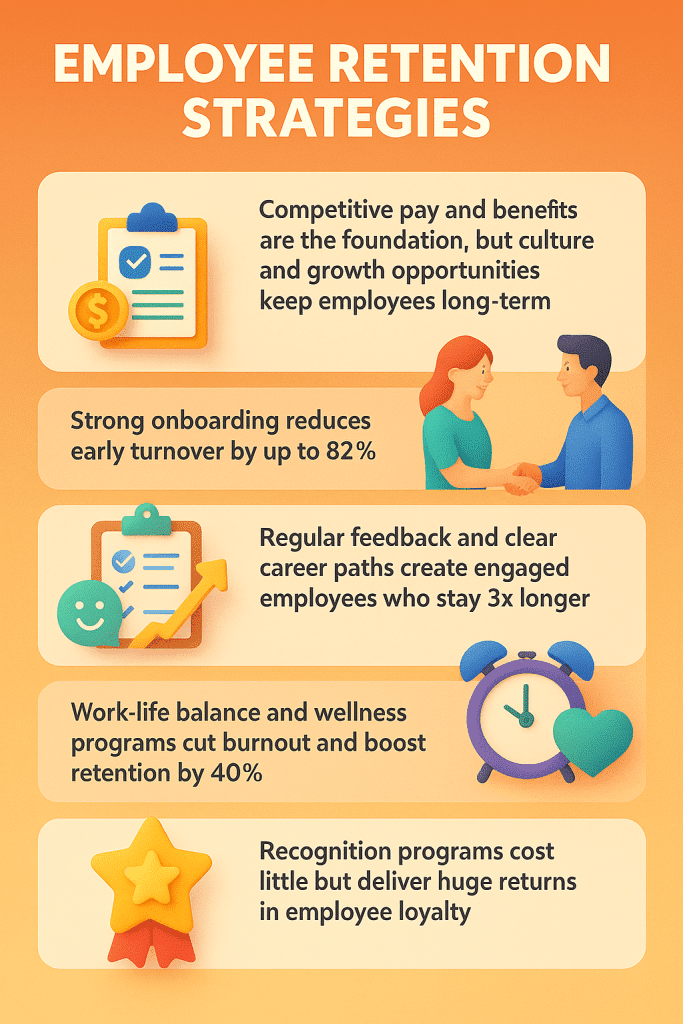
- Competitive pay and benefits are the foundation, but culture and growth opportunities keep employees long-term
- Strong onboarding reduces early turnover by up to 82% when done right
- Regular feedback and clear career paths create engaged employees who stay 3x longer
- Work-life balance and wellness programs cut burnout and boost retention by 40%
- Recognition programs cost little but deliver huge returns in employee loyalty
Employee retention strategies are most effective when they foster a workplace where individuals feel valued, challenged, and supported in their professional growth. The most effective approach combines competitive compensation with strong culture, clear communication, and genuine investment in employee development.
Why Employee Retention Strategies Matter More Than Ever
Losing good employees costs businesses big. The average cost to replace one worker ranges from 50% to 200% of their annual salary. That means losing a $50,000 employee could cost your business up to $100,000 in recruiting, training, and lost productivity.
But the real damage goes deeper. When employees leave, they take with them knowledge, relationships, and team morale. Your remaining staff often take on extra work, leading to stress and increased turnover. This creates a costly cycle that can cripple growing businesses.
Smart employee retention strategies break this cycle by creating conditions where people want to stay and grow with your company. Research shows that companies with high employee engagement see 23% higher profitability and 18% higher productivity.
| Strategy Type | Implementation Cost | Time to See Results | Best For |
|---|---|---|---|
| Competitive Compensation | High | Immediate | All businesses |
| Recognition Programs | Low | 1-3 months | Any size company |
| Training & Development | Medium | 3-6 months | Growth-focused businesses |
| Flexible Work Options | Low | 1-2 months | Knowledge workers |
| Wellness Programs | Medium | 6-12 months | Companies with 50+ employees |
Strategy 1: Build Competitive Compensation and Benefits
Pay remains the top reason people leave jobs. If your compensation falls behind market rates, even a great culture won’t keep top performers. But competitive pay means more than just salary.
Start by researching what similar roles pay in your area using tools like PayScale, Glassdoor, or industry reports. Then, review your total compensation package. Health insurance, retirement matching, paid time off, and other benefits add real value that employees notice.
Who This Works Best For
Every business needs competitive compensation, but it’s especially critical for companies in high-demand fields like technology, healthcare, and skilled trades. If you can’t match top dollar, focus on unique benefits that competitors don’t offer.
Implementation Steps
Conduct annual pay audits to ensure your compensation stays competitive. Survey your industry and region to understand current rates. Consider creative benefits, such as professional development stipends, flexible schedules, or additional vacation days. These can offset slightly lower base pay while appealing to what employees actually want.

Strategy 2: Create a Strong Employee Onboarding Process
First impressions matter enormously in employee retention. A structured onboarding process helps new hires feel welcome, understand expectations, and connect with your company culture from the very beginning.
Effective onboarding goes beyond paperwork and basic training. It includes introducing new employees to key team members, explaining company values through real examples, and setting clear goals for their first 90 days. This approach reduces early turnover and helps employees become productive faster.
Who This Works Best For
Companies with complex roles or strong cultural values benefit most from structured onboarding. It’s especially important for businesses that frequently hire or have experienced high early turnover in the past.
Implementation Steps
Create a checklist that covers everything new employees need to know in their first week, month, and quarter. Assign a buddy or mentor to help them navigate the workplace. Schedule regular check-ins during their first few months to address questions and provide feedback. Document your process so that it remains consistent for every new hire.
Strategy 3: Prioritize Open Communication Channels
Employees who feel heard and informed stay longer. Open communication builds trust, reduces rumors, and helps employees feel connected to company decisions. This means creating multiple ways for information to flow both up and down in your organization.
Regular team meetings, one-on-one sessions with managers, and company-wide updates ensure that everyone remains informed. But communication also means listening. Employee surveys, suggestion boxes, and open-door policies provide people with opportunities to share concerns before they become reasons to leave.
Who This Works Best For
All businesses benefit from better communication, but it’s especially important for growing companies where processes and roles change frequently. Remote or hybrid workplaces need extra focus on communication to maintain connection.
Implementation Steps
Establish regular communication rhythms, such as weekly team meetings and monthly company updates. Train managers on active listening and giving constructive feedback. Create anonymous ways for employees to share concerns or suggestions. Most importantly, follow up on feedback to show you’re actually listening.
Strategy 4: Invest in Training and Development Programs
People want to grow in their careers. Companies that invest in employee development tend to see higher retention rates because workers can advance within the organization without leaving. This investment demonstrates to employees that you’re committed to their future, not just their current role.
Development can take many forms. Formal training programs, conference attendance, online courses, and internal mentoring all contribute to helping employees develop their skills. The key is making development opportunities relevant to both employee goals and business needs.
Who This Works Best For
Knowledge-based businesses and companies with clear career progression paths see the biggest returns from development programs. It’s particularly effective for retaining high-potential employees who might otherwise seek advancement elsewhere.
Implementation Steps
Begin by asking employees what skills they would like to develop. Create individual development plans that align personal goals with business objectives. Set aside budget for training, whether it’s online courses, workshops, or conference attendance. Track progress and celebrate when employees complete development milestones.
Strategy 5: Foster Positive Workplace Culture
Culture isn’t just about ping pong tables and free snacks. It’s about how people treat each other, whether employees feel respected, and if the work environment supports both productivity and well-being. A positive culture motivates people to be excited about coming to work.
Building a great culture starts with leadership but involves everyone. It means hiring people who align with your values, addressing toxic behavior promptly, and fostering traditions that bring teams together. Culture develops over time but requires constant attention to maintain.
Who This Works Best For
Every business needs a positive culture, but it’s especially important for creative industries, startups, and companies where teamwork is essential. A strong culture can help smaller businesses compete with larger companies for talent.
Implementation Steps
Define your company values clearly and hire people who demonstrate them. Address negative behavior immediately before it spreads. Create opportunities for employees to connect, whether through team lunches, volunteer projects, or casual social events. Regularly survey employees about culture and act on their feedback.
Strategy 6: Implement Recognition and Reward Systems
People need to know their work matters. Regular recognition boosts morale, increases engagement, and makes employees feel valued. The best recognition programs combine formal awards with informal appreciation that happens daily.
Recognition doesn’t always mean big bonuses or expensive gifts. Sometimes a simple “thank you” in a team meeting or a handwritten note has more impact than money. The key is making recognition timely, specific, and genuine.
Who This Works Best For
Recognition programs work for any size business but are especially valuable for companies with limited budgets for raises or bonuses. They’re also crucial for businesses where employees rarely interact with customers and might not see the impact of their work.
Implementation Steps
Create both formal and informal recognition systems. This might include employee of the month awards, peer nomination programs, or simple thank-you notes. Train managers to give specific, timely feedback about good work. Consider non-monetary rewards, such as extra time off, preferred parking, or professional development opportunities.
Strategy 7: Promote Work-Life Balance Initiatives
Burnout drives good people away. Employees who feel constantly overwhelmed or unable to manage personal responsibilities alongside work will eventually seek a better balance elsewhere. Smart work-life balance policies prevent this while often boosting productivity.
Work-life balance looks different for every role and person. For some, it means flexible hours. For others, it’s remote work options or generous time off policies. The goal is to help employees manage both work and personal responsibilities without sacrificing either.
Who This Works Best For
Knowledge workers and parents, in particular, value a work-life balance, but it benefits all employees. It’s especially important for businesses in high-stress industries or roles that traditionally require long hours.
Implementation Steps
Survey employees about what work-life balance means to them. Consider flexible start times, remote work options, or compressed work weeks where possible. Encourage employees to actually use their vacation time. Set boundaries around after-hours communication to protect personal time.
Strategy 8: Establish Mentorship Programs
Pairing experienced employees with newer ones creates connections that benefit both parties. Mentors share knowledge and feel valued for their expertise. Mentees receive guidance and support that helps them succeed more quickly. These relationships often become key reasons people stay with companies.
Effective mentorship programs thoughtfully match people and provide a structured framework for the relationship. They’re not just about job skills but also about career development, company culture, and professional networking within the organization.
Who This Works Best For
Companies with experienced employees and clear career paths get the most from mentorship programs. They’re especially valuable for businesses with complex roles or those that have a steep learning curve for new employees.
Implementation Steps
Identify experienced employees willing to mentor others. Establish guidelines for mentor-mentee relationships, including the frequency of meetings and the topics to be covered. Provide training for mentors on effective coaching techniques. Track relationships and gather feedback to improve the program over time.
Strategy 9: Provide Clear Career Advancement Opportunities
Employees leave when they can’t see a future with your company. Clear career paths and advancement opportunities give people reasons to stay and grow. This doesn’t mean everyone gets promoted quickly, but everyone should understand what’s possible.
Career advancement can occur through promotions, as well as through expanded responsibilities, new projects, or lateral moves to different departments. The key is showing employees how their current role connects to future opportunities.
Who This Works Best For
Growing companies with multiple departments or levels see the biggest benefits from clear career paths. It’s also crucial for businesses that want to promote from within rather than always hiring externally for senior roles.
Implementation Steps
Create job families that show progression from entry-level to senior roles. Share these paths with employees and discuss them during performance reviews. Identify high-potential employees and develop tailored plans for their growth and development. When possible, promote internally and communicate these successes to show advancement is real.
Strategy 10: Conduct Regular Feedback and Performance Reviews
Waiting until annual reviews to give feedback wastes opportunities to help employees improve and feel supported. Regular feedback helps people course-correct quickly, celebrates successes when they’re fresh, and builds stronger relationships between managers and employees.
Effective feedback is specific, actionable, and balanced. It recognizes what people do well while addressing areas for improvement. The goal isn’t criticism but development that helps employees succeed in their current role and prepare for future opportunities.
Who This Works Best For
All businesses benefit from regular feedback, but it’s especially important for companies with younger employees, complex roles, or rapidly changing requirements. It’s also crucial for managers who want to build strong teams.
Implementation Steps
Train managers to give effective feedback that’s specific and actionable. Schedule regular one-on-one meetings between managers and employees to foster open communication and collaboration. Create simple systems for tracking employee goals and progress. Make performance conversations ongoing rather than once-yearly events.
“The best retention strategy is to create an environment where people can do their best work and feel genuinely valued for their contributions. It’s not about perks or benefits alone—it’s about building relationships and investing in people’s growth.” – Dr. Sarah Chen, Organizational Psychology Consultant
| Traditional Approach | Modern Retention Strategy |
|---|---|
| Annual performance reviews only | Regular feedback and check-ins |
| One-size-fits-all benefits | Flexible, personalized offerings |
| Focus on salary alone | Total compensation including growth |
| Reactive problem-solving | Proactive culture building |
| Limited advancement paths | Multiple growth opportunities |
Measuring Your Employee Retention Success
Tracking the right metrics helps you understand which retention strategies are most effective for your business. Start with your overall turnover rate, but dig deeper into the distinction between voluntary and involuntary departures, as well as which departments or roles experience the most turnover.
Employee engagement surveys offer early warning signs of potential retention issues. Ask about job satisfaction, relationship with managers, and likelihood to recommend your company as a great place to work. Exit interviews with departing employees reveal specific areas for improvement.
Case Study: TechStart Solutions reduced turnover from 35% to 12% in 18 months by implementing comprehensive onboarding, monthly manager check-ins, and a peer recognition program that cost less than $200 per employee annually.
Case Study: Regional accounting firm Hartwell & Associates achieved a 90% retention rate among employees who participated in their mentorship program, compared to 65% for those who didn’t, leading them to expand the program company-wide.
Conclusion
Building a workforce that stays requires intention and investment, but the payoff is enormous. Companies that implement multiple retention strategies create environments where people choose to build their careers rather than just work jobs. Start with one or two strategies that fit your budget and culture, then expand as you see results. Remember that retention isn’t about keeping everyone—it’s about keeping the right people who contribute to your success and growth. Take action on these proven strategies, and you’ll build a stronger, more stable workforce that drives your business forward.
Employee Retention Strategies FAQs
What are the most cost-effective employee retention strategies for small businesses?
The most cost-effective employee retention strategies for small businesses include recognition programs, flexible work arrangements, and strong communication practices. These approaches require minimal financial investment but create significant value by making employees feel appreciated and heard, often reducing turnover more effectively than expensive benefits packages.
How long does it take to see results from employee retention strategies?
Most employee retention strategies show initial results within 3-6 months of implementation, with full impact becoming clear over 12-18 months. Quick wins, such as recognition programs and improved communication, can boost morale immediately, while longer-term strategies, like career development and culture change, require sustained effort to demonstrate measurable retention improvements.
Which employee retention strategies have the highest ROI?
Employee recognition programs and manager training typically deliver the highest ROI for retention strategies, costing relatively little while significantly impacting engagement and turnover. Strong onboarding processes also provide excellent returns, reducing early-stage turnover that is particularly expensive for businesses to manage.
How do you retain employees when you can’t offer competitive salaries?
When competitive salaries aren’t possible, focus on non-monetary retention strategies, such as professional development opportunities, flexible work arrangements, a strong company culture, and clear advancement paths. Many employees value growth opportunities, work-life balance, and meaningful work as much as higher pay, especially when these benefits are consistently delivered.
What’s the difference between employee retention and employee engagement strategies?
Employee retention strategies focus specifically on keeping people from leaving the company, while employee engagement strategies aim to increase involvement and commitment to work. Engagement strategies often support retention goals, but retention strategies are more directly targeted at addressing the specific reasons why employees choose to stay or leave their positions.