

Key Takeaways
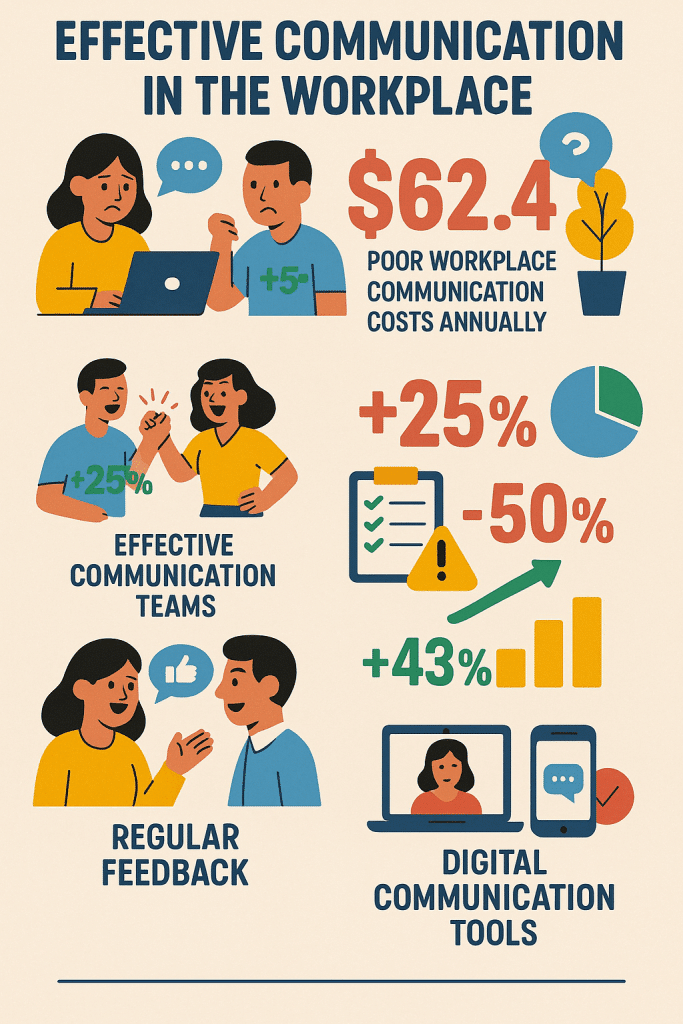
- Poor workplace communication costs companies an average of $62.4 million annually in lost productivity and turnover
- Teams with effective communication are 25% more productive and have 50% lower turnover rates
- Clear communication reduces project failures by 76% and improves customer satisfaction by 33%
- Regular feedback conversations increase employee engagement by 43% and retention by 40%
- Digital communication tools must be paired with face-to-face interactions for maximum effectiveness
Effective communication in the workplace has a direct impact on employee retention, as it fosters trust, reduces misunderstandings, and creates an environment where workers feel heard and valued. Companies that prioritize clear and consistent communication experience significantly higher employee satisfaction and lower turnover costs.
The Hidden Costs of Poor Workplace Communication
Poor communication doesn’t just create awkward moments or hurt feelings – it destroys business profitability through missed deadlines, repeated work, and constant employee turnover. When workers don’t understand expectations, can’t get clear answers to their questions, or feel excluded from important decisions, they become frustrated and start looking for new jobs where communication works more effectively.
The financial impact adds up quickly across multiple areas of business operations. Projects fail when team members work toward different goals because the instructions were unclear. Customer relationships suffer when employees can’t communicate effectively with clients or when internal miscommunication leads to service failures. Companies with poor communication practices spend 67% more time fixing mistakes and rework compared to organizations with strong communication systems. These hidden costs often exceed the obvious expenses of recruiting and training replacement employees.
Employee Turnover and Communication Breakdown
Exit interview data consistently shows that communication problems rank among the top three reasons employees leave their jobs. Workers who feel their manager doesn’t listen to concerns, doesn’t provide clear direction, or fails to communicate important information are five times more likely to quit within six months. This pattern creates expensive turnover cycles where companies lose institutional knowledge and spend thousands of dollars finding and training replacements.
The problem compounds when good employees leave and share their negative experiences with others in their professional networks. Poor communication reputations spread quickly in tight-knit industries, making it harder to attract quality candidates and often forcing companies to offer higher salaries to overcome their damaged employer brand.

Building Strong Communication Foundations for Better Retention
Creating effective communication in the workplace starts with establishing clear channels, consistent expectations, and regular feedback loops that keep everyone informed and engaged. The most successful organizations view communication as a core business skill that requires ongoing development and attention, rather than something that happens naturally or can be overlooked.
Establishing Clear Communication Channels
Effective workplace communication requires multiple channels that serve different purposes and communication styles. Email is well-suited for detailed information and documentation, while instant messaging is ideal for handling quick questions and updates. Video calls enable nuanced conversations that build relationships, and in-person meetings create the strongest connections for important discussions. The key is helping employees understand which channel to use for different types of communication and ensuring that everyone has access to the necessary tools.
Document communication protocols that outline response time expectations, escalation procedures, and appropriate channels for different types of messages. This clarity reduces frustration when people don’t receive responses as quickly as expected and ensures that important information reaches the right people through the correct channels. Regular training on communication tools and expectations helps both new and existing employees use systems effectively.
Creating Psychological Safety for Open Dialogue
Employees won’t communicate openly if they fear negative consequences for sharing concerns, asking questions, or admitting mistakes. Psychological safety – the belief that you can speak up without risk of punishment or humiliation – forms the foundation of effective workplace communication. Leaders must consistently demonstrate that they welcome honest feedback, questions about decisions, and reports of problems without retaliating against the messenger. This will enhance morale and create a happier workplace.
Teams with high psychological safety are 76% more likely to engage in constructive conflict resolution and 67% more likely to report errors before they become major problems. This openness prevents small issues from escalating into major crises while fostering trust between managers and employees. Regular team discussions about communication norms and leader vulnerability in admitting their own mistakes help establish this safe environment.
| Communication Challenge | Impact on Retention | Solution Strategy | Implementation Time |
|---|---|---|---|
| Unclear expectations | 35% higher turnover | Written job descriptions, regular check-ins | 30 days |
| Lack of feedback | 40% higher turnover | Weekly one-on-ones, quarterly reviews | 60 days |
| Poor change communication | 55% higher turnover | Town halls, transparent updates | 90 days |
| Limited career discussions | 45% higher turnover | Career planning meetings, mentorship | 120 days |
Implementing Regular Feedback Systems for Effective Communication in the Workplace
Consistent feedback conversations keep employees engaged and informed while preventing the misunderstandings that lead to job dissatisfaction and turnover. The most effective feedback systems incorporate both formal review processes and informal daily interactions that address concerns before they escalate into major problems.
Structured One-on-One Meetings
Weekly or bi-weekly one-on-one meetings between managers and direct reports create dedicated time for important conversations that often get lost in busy daily schedules. These conversations shouldn’t focus only on task updates but should include career development discussions, obstacle identification, and relationship building that strengthen communication over time. Employees who have regular one-on-ones report 29% higher job satisfaction and are 40% less likely to leave their current position.
Successful one-on-one meetings follow consistent agendas that include reviewing recent accomplishments, discussing current challenges, setting priorities for the coming period, and exploring professional development opportunities. This structure ensures both parties come prepared while covering all important topics systematically. Many companies use simple templates or digital tools to track conversation topics and follow up on commitments made during these meetings.
360-Degree Feedback Programs
Traditional top-down feedback often overlooks important perspectives from peers and subordinates who interact with employees in various contexts. 360-degree feedback programs gather input from multiple sources to provide comprehensive insights into communication and performance, helping individuals enhance their workplace relationships and effectiveness. These programs work best when framed as development opportunities rather than performance evaluations.
According to organizational communication expert Dr. Jennifer Martinez, “The most valuable feedback comes from understanding how your communication style affects different people in various situations. 360-degree programs reveal blind spots that self-assessment and manager feedback alone cannot identify.” Focus on specific communication behaviors and their impact rather than personality traits to make feedback actionable and useful for improvement.
Leveraging Technology to Enhance Workplace Communication
Modern communication tools can dramatically improve information sharing and collaboration when implemented thoughtfully and paired with proper training. However, technology alone doesn’t solve communication problems – it amplifies existing communication patterns, making good communication better while exacerbating poor communication.
Digital Collaboration Platforms
Integrated communication platforms that combine messaging, video calling, file sharing, and project management create central hubs where teams can collaborate effectively regardless of their physical location. These tools are most effective when organizations establish clear guidelines for their use and provide adequate training to ensure that everyone can participate fully and effectively. The goal is to minimize communication friction while preserving the personal connections that foster trust and engagement.
Choose platforms that integrate with existing workflows rather than requiring employees to learn completely new systems. Gradual implementation with pilot groups helps identify potential problems and builds internal champions who can help train other team members. Regular feedback sessions about tool effectiveness ensure that technology continues to serve communication goals rather than creating new barriers.
Communication Analytics and Measurement
Many modern communication tools offer analytics that enable organizations to understand communication patterns, identify bottlenecks, and track improvements over time. This data reveals insights into which teams collaborate most effectively, where information tends to get stuck, and how communication frequency impacts project outcomes. Utilize these insights to refine your communication processes and identify teams that may require additional support or training.
| Communication Method | Best Use Cases | Retention Impact | Implementation Complexity |
|---|---|---|---|
| Face-to-face meetings | Complex discussions, relationship building | High (+35%) | Low |
| Video conferencing | Remote teams, visual presentations | Medium (+20%) | Medium |
| Instant messaging | Quick questions, informal updates | Medium (+15%) | Low |
| Documentation, detailed information | Low (+5%) | Low |
Managing Change Communication to Retain Top Talent
How organizations communicate during periods of change often determines whether employees remain committed or begin seeking more stable opportunities elsewhere. Effective change communication addresses both the logical and emotional aspects of transitions while providing regular updates that reduce uncertainty and anxiety.
Transparent Change Announcements
Employees hate surprises, especially when changes affect their job security, responsibilities, or working conditions. Transparent communication about upcoming changes, including the reasons behind decisions and expected timelines, helps workers understand and adapt rather than resist or flee. Share information as early as possible, even when details aren’t finalized, to prevent rumors and speculation that often create more anxiety than the actual changes.
Address both the business rationale and personal impact of changes honestly. Employees can handle difficult news more effectively when they understand the reasoning behind it and see that leadership has considered their concerns. Companies that communicate change transparently see 43% less voluntary turnover during transition periods compared to organizations that withhold information until the last minute. Regular updates throughout the change process maintain trust and engagement even when the changes are challenging.
Two-Way Change Communication
Effective change communication flows in both directions, with leadership sharing information and employees providing feedback that influences implementation decisions. Town hall meetings, anonymous feedback systems, and focus groups give workers opportunities to ask questions, express concerns, and suggest improvements that make changes more successful. This involvement increases buy-in while identifying potential problems before they derail change initiatives.
A manufacturing company in Michigan reduced change-related turnover from 34% to 12% by implementing monthly change communication forums where employees could ask questions directly to executives and suggest modifications to proposed changes. This transparent dialogue helped workers feel heard, while providing leadership with valuable insights that improved change outcomes for everyone involved.
Building Cross-Department Communication for Organizational Success
Silos between departments create communication breakdowns that frustrate employees and hurt business performance. Workers who cannot obtain information or cooperation from other teams often feel powerless to perform their jobs effectively, leading to stress and job dissatisfaction that can drive turnover.
Cross-Functional Team Projects
Regular cross-departmental projects help employees build relationships and understanding that improve ongoing communication and collaboration. These projects are most effective when they address real business challenges and provide opportunities for people from different areas to collaborate toward shared goals. The relationships formed during these collaborations continue to benefit communication long after projects end.
Structure cross-functional teams with clear roles, decision-making authority, and communication protocols that prevent confusion about responsibilities and reporting relationships. Provide facilitation support to help teams navigate different communication styles and priorities between departments. Celebrate successful cross-functional achievements to reinforce the value of collaboration and encourage future cooperation.
Internal Communication Champions
Designate communication champions in each department who serve as liaisons for sharing information and coordinating activities with other teams. These champions help break down barriers while ensuring important information flows smoothly throughout the organization. Choose people who have strong relationships across departments and natural communication skills that make them effective bridges between different groups.
Train communication champions in facilitation skills, conflict resolution, and information management to help them succeed in their liaison roles. Regular champion meetings create opportunities to identify communication challenges early and develop solutions before problems affect broader team relationships and retention.
Measuring Communication Effectiveness and Employee Retention
Successful communication improvement requires ongoing measurement to identify what’s working, what needs adjustment, and where to focus future efforts. Regular assessment helps organizations refine their communication strategies while demonstrating the connection between communication quality and employee retention.
Communication Surveys and Assessment Tools
Quarterly communication surveys, which ask specific questions about information flow, manager accessibility, feedback quality, and collaboration effectiveness, provide baseline measurements and track improvements over time. Focus on actionable metrics that can guide specific improvements rather than general satisfaction scores that don’t indicate what needs to change.
Include questions about communication preferences, channel effectiveness, and barriers that prevent good communication. This information enables organizations to tailor their communication strategies to meet employee needs while identifying systemic issues that require attention. Anonymous surveys often reveal communication problems that employees hesitate to discuss openly.
Retention Analytics and Communication Correlation
Track the relationship between communication metrics and retention rates to identify which communication improvements yield the best results in retaining valuable employees. Look for patterns, such as teams with higher one-on-one meeting frequencies having lower turnover, or departments with better change communication seeing higher engagement scores during transitions.
This data helps justify communication improvement investments while identifying which strategies provide the best return on effort. Use these insights to prioritize communication initiatives and allocate training resources where they’ll have the most impact on employee retention and satisfaction.
Taking Action: Your Workplace Communication Improvement Plan
Improving effective communication in the workplace starts with an honest assessment of current communication strengths and weaknesses, followed by systematic implementation of improvements that address the most critical gaps first. Focus on building consistent communication habits rather than implementing complex systems that may be difficult to maintain over the long term.
Begin with simple changes, such as regular one-on-one meetings and clear communication guidelines, and then gradually add more sophisticated tools and processes based on employee feedback and measured results. Remember that communication improvement is an ongoing process that requires consistent attention and adjustment as your organization grows and changes. Investing in better communication pays dividends through higher employee retention, improved productivity, and stronger business performance, creating sustainable competitive advantages in your market.
Effective Communication in the Workplace FAQs
What is effective communication in the workplace?
Effective communication in the workplace involves clear, timely, and appropriate information sharing that helps employees understand expectations, feel heard, and collaborate successfully. It includes both formal systems like meetings and informal interactions that build relationships and trust between team members and management.
How does effective communication in the workplace improve employee retention?
Effective communication in the workplace enhances employee retention by reducing misunderstandings, fostering trust between managers and employees, and cultivating an environment where workers feel valued and informed. Companies with strong communication practices experience 50% lower turnover rates, as employees feel more engaged and satisfied with their work experience.
What are the biggest barriers to effective workplace communication?
The biggest barriers to effective workplace communication include unclear expectations, a lack of regular feedback, poor listening skills from managers, and inadequate communication channels for different types of information. Organizational silos and a fear of speaking up about problems also prevent open communication, which is essential for building employee engagement.
How often should managers communicate with their teams?
Managers should communicate with their teams daily through informal check-ins and weekly through structured one-on-one meetings with individual team members. Team meetings should occur weekly or bi-weekly, depending on project needs, while broader organizational updates should happen monthly to keep everyone informed about company direction and changes.
What role does technology play in workplace communication?
Technology plays a supporting role in workplace communication by providing tools for messaging, video conferencing, file sharing, and project collaboration that enhance human interaction rather than replacing it. The most effective communication strategies combine digital tools with face-to-face conversations to build relationships while improving information flow and accessibility.

Paul Kohn MBA is a seasoned business consultant known for helping businesses maximize tax credits and incentives to fuel growth and profitability. He holds a Master’s in Business Administration and has helped numerous companies secure millions in tax credits and implement effective business strategies. He is regarded as a trusted authority for business owners seeking to optimize their savings and growth.