

Key Takeaways
- A positive work environment increases employee productivity by 31% and reduces turnover by up to 40%
- Strong leadership communication and recognition programs form the foundation of workplace positivity
- Comprehensive health benefits and wellness programs directly impact employee happiness and engagement
- Physical workspace design and flexible work arrangements significantly influence employee satisfaction
- Regular feedback systems and professional development opportunities create long-term employee loyalty
- Team building activities and inclusive culture practices strengthen workplace relationships
- Measuring workplace culture through surveys and metrics ensures continuous improvement
Building a positive work environment requires intentional strategies that address employee well-being, foster clear communication, offer comprehensive benefits, and provide opportunities for growth, ultimately leading to higher productivity, improved retention, and enhanced business outcomes.
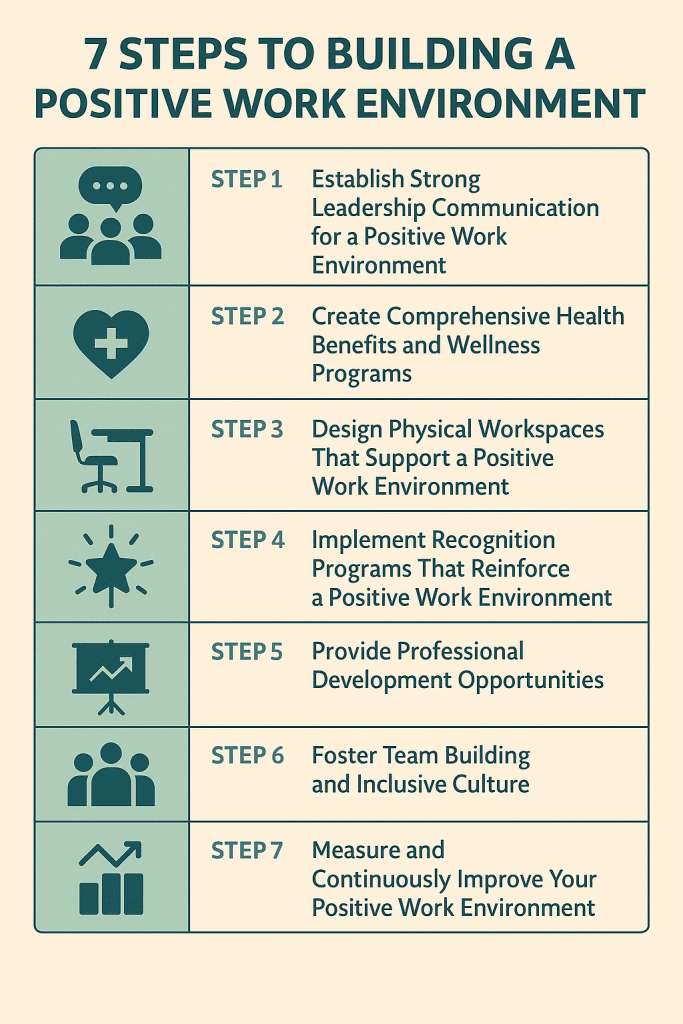
Step 1: Establish Strong Leadership Communication for a Positive Work Environment
Creating a positive work environment starts with leadership that communicates openly, honestly, and regularly with all team members. Strong communication from management sets the tone for the entire organization and demonstrates that employee voices matter in decision-making processes.
Effective leadership communication involves regular one-on-one meetings, transparent company updates, and accessible channels for employees to provide feedback and express concerns. Leaders who actively listen to their teams and respond thoughtfully to suggestions foster trust and psychological safety, which form the foundation of a positive work environment.

Implementing Open-Door Policies and Regular Check-ins
Open-door policies are most effective when combined with structured communication schedules that ensure regular contact between managers and team members. Weekly or bi-weekly one-on-one meetings provide dedicated time for employees to discuss challenges, share ideas, and receive guidance without feeling rushed or unheard.
These regular check-ins should focus on both work progress and employee well-being, creating opportunities to address issues before they become major problems. Leaders who consistently show genuine interest in their employees’ professional development and personal success build stronger, more loyal teams.
Transparent Decision-Making Processes
Transparency in decision-making helps employees understand how their work contributes to company goals while building trust in leadership direction. Regular company meetings, quarterly business updates, and clear explanations of strategic changes help employees feel included in the organization’s journey.
When leaders explain the reasoning behind decisions, even difficult ones, employees are more likely to support changes and maintain positive attitudes during challenging periods. This transparency reduces uncertainty and speculation that can damage workplace morale.
| Communication Strategy | Frequency | Purpose | Impact on Positive Work Environment |
|---|---|---|---|
| One-on-One Meetings | Weekly/Bi-weekly | Individual support and feedback | Builds trust and addresses concerns early |
| Team Meetings | Weekly | Project coordination and updates | Improves collaboration and alignment |
| Company All-Hands | Monthly/Quarterly | Strategic updates and recognition | Creates shared purpose and celebration |
| Open Office Hours | Weekly | Accessible leadership contact | Demonstrates approachability and openness |
Step 2: Create Comprehensive Health Benefits and Wellness Programs
Comprehensive health benefits and wellness programs demonstrate genuine care for employee well-being while directly contributing to a positive work environment. When employees feel secure about their health coverage and supported in maintaining their wellness, they bring more energy and engagement to their work.
The best health benefits packages go beyond basic insurance to include mental health support, preventive care, wellness programs, and family coverage options that address the complete spectrum of employee health needs. These investments yield dividends through reduced absenteeism, increased productivity, and enhanced employee loyalty.
One program that is available to businesses is the Section 125 Cafeteria Plan. This is a great no cost solution that gives great value to employees and the business.
Mental Health Support and Employee Assistance Programs
Mental health benefits have become essential components of positive work environments as workplace stress and burnout increasingly affect employee performance and satisfaction. Employee assistance programs, counseling services, and mental health days provide crucial support that helps employees manage both personal and professional challenges.
Progressive companies are incorporating stress management workshops, mindfulness training, and on-site counseling services that proactively address mental health rather than reactively. A technology startup reduced employee turnover by 35% after implementing comprehensive mental health benefits including therapy coverage and stress management programs.
Physical Wellness and Preventive Care Initiatives
Physical wellness programs that include gym memberships, health screenings, vaccination clinics, and fitness challenges foster a positive work environment by demonstrating a commitment to long-term employee health. These programs often generate immediate returns through reduced sick days and healthcare costs.
Preventive care initiatives such as annual health assessments, nutrition counseling, and ergonomic workplace evaluations help employees maintain their health while reducing future medical expenses for both employees and employers. Companies with comprehensive wellness programs see 25% lower healthcare costs and significantly higher employee satisfaction scores.
Step 3: Design Physical Workspaces That Support a Positive Work Environment
The physical workspace has a direct impact on employee mood, productivity, and collaboration, making thoughtful design essential for creating a positive work environment. Well-designed offices that prioritize natural light, comfortable furniture, and flexible spaces help employees feel valued while supporting different work styles and needs.
Modern workspace design strikes a balance between open collaboration areas and quiet focus zones, offering employees a choice about where and how they work most effectively. This flexibility demonstrates trust in employee judgment while accommodating diverse work preferences and tasks.
Natural Light and Ergonomic Furniture
Natural light has a significant impact on employee well-being and productivity, with studies showing that workers in well-lit spaces report 15% higher well-being scores and a 6% increase in productivity. Workspaces should maximize natural light while offering adjustable lighting options to accommodate various tasks and times of day.
Ergonomic furniture investments, including adjustable desks, supportive chairs, and proper monitor positioning, reduce physical discomfort while demonstrating care for employee health. These improvements often pay for themselves through reduced workers’ compensation claims and improved productivity.
Collaborative and Quiet Zones
Effective workspace design provides a range of environments that support various types of work, from collaborative brainstorming sessions to focused individual tasks. Open areas encourage teamwork and communication, while quiet zones provide a space for concentrated work without distractions.
Flexible spaces that can be reconfigured for various purposes provide teams with the tools they need to work effectively while adapting to changing project requirements. A marketing agency increased employee satisfaction by 40% after redesigning its office to include both collaborative spaces and private work areas.
Step 4: Implement Recognition Programs That Reinforce a Positive Work Environment
Recognition programs that celebrate both individual achievements and team successes create positive feedback loops that reinforce desired behaviors and outcomes, fostering a culture of excellence. Regular acknowledgment of good work makes employees feel valued while encouraging continued high performance across the organization.
Effective recognition goes beyond annual reviews to include peer-to-peer recognition, milestone celebrations, and public acknowledgment of contributions that make a difference. These programs are most effective when they’re timely, specific, and aligned with the company’s values and goals.
Peer-to-Peer Recognition Systems
Peer recognition programs empower employees to acknowledge each other’s contributions, creating a culture where appreciation flows naturally throughout the organization. Digital platforms that allow easy recognition, submission, and sharing help build momentum around positive interactions.
These systems work particularly well when they include specific examples of how recognized behaviors support team goals or company values. Regularly sharing peer recognition in team meetings or company communications amplifies the positive impact while encouraging more recognition activities.
Milestone and Achievement Celebrations
Celebrating work anniversaries, project completions, and professional achievements demonstrates to employees that their growth and contributions are valued by the organization. These celebrations can range from simple acknowledgments in team meetings to more elaborate recognition events for major milestones.
Public recognition through company newsletters, social media posts, or internal communications extends the positive impact while inspiring other employees to pursue similar achievements. The key is consistency and authenticity in celebrating success at all levels of the organization.
Step 5: Provide Professional Development Opportunities
Professional development opportunities demonstrate a commitment to employee growth and development, while building the skills that support business expansion. When employees see clear paths for advancement and receive support for their career goals, they’re more likely to remain engaged and committed to the organization.
Comprehensive development programs encompass training opportunities, mentoring relationships, conference attendance, and tuition reimbursement, all of which help employees build new skills and advance their careers. These investments often generate returns through improved performance and reduced turnover costs.
Skills Training and Certification Programs
Skills training programs that align with both employee interests and business needs create win-win situations where employees gain valuable capabilities while the organization builds internal expertise. Online learning platforms, workshop series, and certification reimbursement programs provide flexible development options.
Regular skills assessments help identify training needs while ensuring that development efforts address actual gaps that impact performance. A consulting firm increased employee retention by 50% after implementing comprehensive skills training programs that included both technical and leadership development tracks.
Mentoring and Career Advancement Support
Mentoring programs that pair experienced employees with developing team members facilitate knowledge transfer while building stronger internal relationships. These programs benefit both mentors and mentees while creating succession planning opportunities for key positions.
Clear career advancement pathways with defined requirements and timelines help employees understand what they need to do to progress within the organization. Regular career planning conversations between managers and employees ensure that development efforts align with both individual goals and business needs.
Step 6: Foster Team Building and Inclusive Culture
Team-building activities and inclusive culture practices strengthen workplace relationships, creating environments where all employees feel valued and included. These efforts go beyond occasional social events to include ongoing initiatives that build trust and collaboration across diverse teams.
Inclusive culture development requires intentional effort to ensure that all employees have equal opportunities to contribute, advance, and succeed regardless of their background or personal characteristics. This creates positive work environments where diversity becomes a source of strength and innovation.
Regular Team Building Activities
Effective team-building activities range from informal social gatherings to structured problem-solving exercises that help colleagues build personal connections and enhance collaboration. The best activities align with team interests while supporting business objectives.
Regular team activities, such as lunch-and-learns, volunteer projects, or recreational outings, provide opportunities for employees to interact outside of normal work contexts. These relationships often translate into better workplace communication and stronger team performance on projects.
Diversity and Inclusion Initiatives
Diversity and inclusion initiatives that extend beyond policy statements to encompass training, mentoring, and advancement programs foster positive work environments where all employees can thrive. These efforts require ongoing commitment and measurement to ensure meaningful progress.
As workplace culture expert Dr. Jennifer Williams notes, “Organizations with strong diversity and inclusion programs see 19% higher revenue growth and 70% more likely to capture new markets because diverse teams bring different perspectives that drive innovation.”
Step 7: Measure and Continuously Improve Your Positive Work Environment
Regular measurement and continuous improvement ensure that positive work environment initiatives remain effective and relevant as organizations evolve. Employee surveys, retention metrics, and performance data provide insights into what’s working and what needs adjustment.
Systematic measurement approaches include quarterly employee satisfaction surveys, annual culture assessments, and ongoing feedback collection through multiple channels. This data helps leaders make informed decisions about workplace improvements, demonstrating their commitment to enhancing the employee experience.
Employee Satisfaction Surveys and Feedback Systems
Regular employee satisfaction surveys provide quantitative data on workplace culture, identifying specific areas for improvement. Anonymous survey options encourage honest feedback, while pulse surveys between annual assessments track progress on improvement initiatives.
Effective survey programs include action planning based on results, with clear communication about how feedback will be used to drive improvements. Following up on survey results with concrete changes demonstrates that employee input leads to meaningful action.
Performance Metrics and Retention Analysis
Performance metrics such as productivity measures, quality scores, and customer satisfaction ratings often reflect the effectiveness of positive work environment initiatives. These objective measures complement survey data to provide a comprehensive picture of the workplace culture’s impact.
Retention analysis, including exit interview data, tenure patterns, and promotion rates, helps identify which aspects of the work environment most effectively support employee loyalty. This analysis guides investment decisions about workplace improvements that deliver the highest return.
| Traditional Workplace | Positive Work Environment |
|---|---|
| Limited communication from leadership | Regular, transparent communication |
| Basic health insurance only | Comprehensive wellness programs |
| Fixed, outdated workspace design | Flexible, employee-centered design |
| Annual performance reviews only | Ongoing recognition and feedback |
| Limited development opportunities | Continuous learning and growth support |
| Minimal team interaction | Regular team building and inclusion focus |
| No culture measurement | Regular surveys and improvement cycles |
Building a positive work environment requires consistent effort across multiple areas; the results speak for themselves, with improved employee satisfaction, higher productivity, and better business outcomes. Companies with highly engaged employees see 23% higher profitability and 18% higher productivity compared to those with disengaged workforces. Begin by evaluating your current workplace culture, and then systematically implement improvements that address your team’s specific needs and challenges. Remember that creating positive change takes time, but every step toward a better work environment benefits both your employees and your bottom line.
Positive Work Environment FAQs
What are the key elements of a positive work environment?
A positive work environment encompasses strong leadership communication, comprehensive health benefits, supportive physical workspaces, regular recognition programs, professional development opportunities, an inclusive team culture, and ongoing performance measurement systems. These elements work together to create workplace cultures where employees feel valued, supported, and motivated to perform their best work.
How does a positive work environment impact employee productivity?
A positive work environment increases employee productivity by 31% through improved engagement, reduced stress, and better collaboration among team members. Employees in positive environments are more focused, creative, and willing to go above and beyond their basic job requirements, resulting in higher-quality work and better business outcomes.
What role do health benefits play in creating a positive work environment?
Comprehensive health benefits, including mental health support, wellness programs, and preventive care, demonstrate genuine concern for employee well-being and directly contribute to workplace positivity. When employees feel secure about their health coverage and supported in maintaining wellness, they bring more energy and engagement to their work while experiencing less stress about personal health concerns.
How can small businesses create a positive work environment on a limited budget?
Small businesses can create positive work environments through low-cost initiatives like regular recognition programs, flexible work arrangements, open communication policies, and team-building activities that don’t require large financial investments. Focusing on leadership development, peer recognition systems, and workplace flexibility can often have a significant impact without requiring major budget allocations.
How long does it take to build a positive work environment?
Building a positive work environment typically takes 6-12 months to show measurable improvements, with full culture transformation occurring over 2-3 years of consistent effort. Early wins, such as improved communication and recognition programs, can create positive changes within weeks, while deeper cultural shifts require sustained commitment and ongoing refinement based on employee feedback and results.

Paul Kohn MBA is a seasoned business consultant known for helping businesses maximize tax credits and incentives to fuel growth and profitability. He holds a Master’s in Business Administration and has helped numerous companies secure millions in tax credits and implement effective business strategies. He is regarded as a trusted authority for business owners seeking to optimize their savings and growth.