
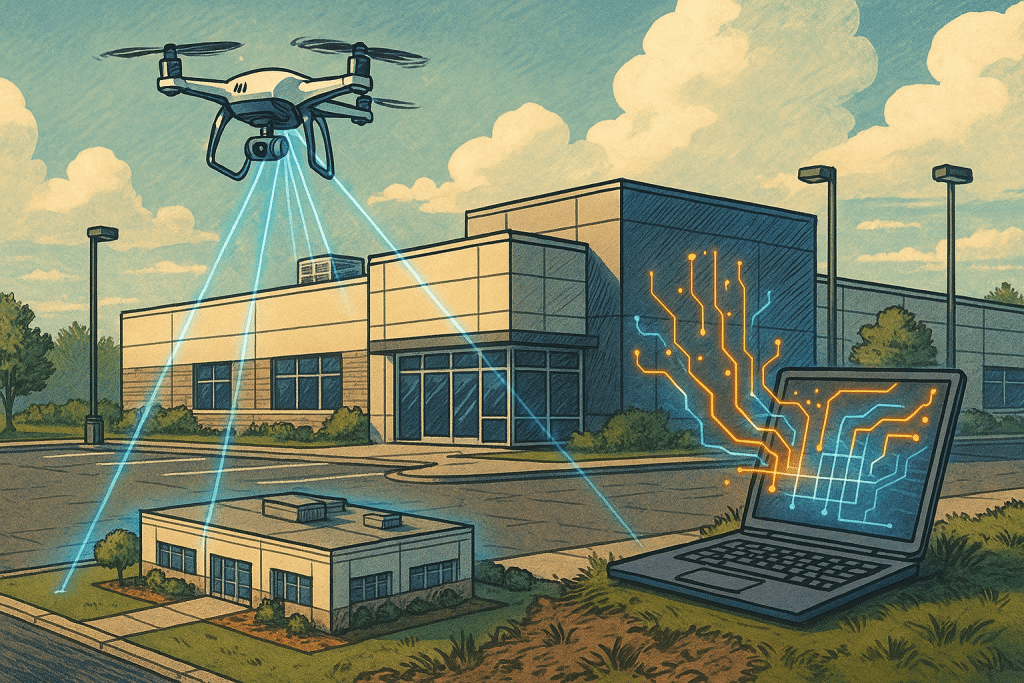
A remote cost segregation study uses virtual inspections and digital documentation to identify faster-depreciating assets in your property without requiring an on-site visit. This engineering-based approach analyzes your building through video calls and 3D modeling to deliver the same tax savings as traditional studies at 30-50% lower cost.
Key Takeaways
- Remote studies cost $2,500-$5,000 compared to $5,000-$15,000 for traditional on-site visits
- Virtual inspections take 30-45 minutes using your smartphone or tablet
- IRS doesn’t require physical site visits – video documentation meets audit technique guide recommendations
- Turnaround times average 2-3 weeks versus 4-6 weeks for traditional studies
- Professional engineering analysis through remote methods withstands IRS scrutiny when properly documented
What Makes Virtual Site Inspections Different From Traditional Visits
The difference isn’t in the results. It’s in how we get there.
Traditional cost segregation meant scheduling conflicts. Travel expenses. Disrupting your property operations. An engineer would fly in, walk through your building with a clipboard, and leave. That old model worked but ate into your savings.
Virtual site inspections flip the script. You stand in your building with your phone. A cost segregation engineer guides you through a live video call. They see what you see. They direct which areas to focus on, what angles to capture, which systems to document. The whole thing wraps up in under an hour.
Your phone becomes their eyes. The video becomes permanent documentation the IRS can review if needed. The video record actually provides stronger audit protection than handwritten notes from a physical visit.
Here’s what most people miss – the IRS Cost Segregation Audit Technique Guide recommends “field inspections” but never mandates physical presence. The guide focuses on thorough documentation, not geography. A detailed video walkthrough with narration captures more information than a rushed on-site visit.
How Remote Cost Segregation Studies Work Step-by-Step
The process feels straightforward once you understand it.
First comes the initial consultation. You share basic property details – purchase price, square footage, property type. The firm runs a preliminary analysis to estimate your potential tax savings. This takes maybe 15 minutes on a phone call.
Next you gather documents. Closing statements (required). Construction costs if you built or renovated. Appraisals. Site surveys. Photos you already have. Most clients don’t have everything on the list. That’s normal. The firm works with what’s available.
Then comes the virtual site inspection. You book a time slot. Someone familiar with the property – you, your property manager, even a maintenance person – walks through with their phone on a video call. The engineer guides the tour. “Show me the HVAC system. Pan across the parking lot. Zoom in on that electrical panel.” They’re documenting everything needed for asset classification.
Behind the scenes, engineers analyze. They review your video, cross-reference construction documents, apply engineering cost estimates. They identify which building components qualify as personal property versus real property. They calculate depreciation schedules for each asset. They build your comprehensive reporting.
Two to three weeks later, you receive your report. A detailed PDF outlining methodology and findings. An Excel file with your fixed asset schedule – exactly what your CPA needs. Done.
| Decision Factor | Best For Remote Study | Best For On-Site Study |
|---|---|---|
| Property Value | Under $5 million | Over $5 million |
| Documentation Quality | Good construction records available | Limited or missing documentation |
| Property Complexity | Standard commercial or residential | Specialized equipment or historic properties |
| Budget | Cost-conscious, seeking efficiency | Maximum deduction identification priority |
| Timeline | Need results within 2-3 weeks | Can accommodate 4-6 week timeline |
| Geographic Location | Remote locations or multiple states | Local properties with complex systems |
The Technology Behind Video Call Evaluations
Most smartphones packed more computing power than computers that sent astronauts to the moon. That’s the technology making remote cost segregation possible.
Real-Time Video Conferencing Tools
Engineers use standard video platforms – Zoom, Microsoft Teams, FaceTime. Nothing proprietary. Nothing complicated. The video quality from modern phones captures detail traditional cameras couldn’t match ten years ago. High-resolution recording preserves everything for later review.
3D Modeling and Digital Documentation
Some firms take it further. They use video footage to create 3D models of your property. Building Information Modeling software reconstructs spaces digitally. Artificial intelligence helps identify building components automatically. These aren’t science fiction tools – they’re becoming standard practice.
The technology handles the heavy data lifting. But here’s the truth – technology doesn’t replace human expertise. It amplifies it. An experienced engineer reviewing your video footage catches details a computer algorithm misses. They understand construction methods. They know IRS regulations. They’ve completed hundreds of studies.
Cloud-Based Asset Classification Systems
Everything lives in the cloud now. Your documents upload to secure portals. Video recordings store encrypted. Engineers access files from anywhere. Your CPA downloads the final fixed asset review without waiting for mail delivery.
This distributed approach means you can work with the best specialists regardless of location. You’re not limited to whoever practices in your city. Want the engineer who specializes in hotels? They’re available via video whether they’re in New York or California.
Understanding IRS Requirements for Remote Studies
The question everyone asks – will the IRS accept this?
Short answer: Yes. When done properly.
The IRS Cost Segregation Audit Technique Guide is a 261-page document that agents use to review studies. It recommends field inspections to document “physical details of the building, type of construction, materials used for construction, the assets contained in the building, the size and types of building systems, and any land improvements.”
Notice what’s missing? No requirement for physical presence. The guide emphasizes thorough documentation, not travel logs.
Here’s what the IRS actually cares about:
- Qualified Preparer – Someone with engineering and tax law expertise prepared your study
- Detailed Engineering Analysis – Not rules of thumb, actual component-by-component evaluation
- Proper Asset Classification – Clear rationale for why each component received its depreciation schedule
- Cost Reconciliation – Total allocated costs match your actual purchase or construction costs
- Supporting Documentation – Invoices, photos, videos, plans, whatever proves your classifications
A remote cost segregation study that checks these boxes meets IRS standards. The audit rate for properly prepared studies sits below 0.1%. The success rate when audits do occur? Nearly 100% when firms stand behind their work.
One client purchased a $2.8 million apartment building in Phoenix. They chose a remote study to save costs. Two years later, the IRS selected their return for examination. The video walkthrough provided clear documentation of each building system. The engineer’s methodology followed the detailed engineering approach from actual cost records. The study withstood scrutiny. No adjustments. Done.
State and Federal Tax Law Considerations
This gets complicated fast.
Federal tax law allows accelerated depreciation through cost segregation. That’s straightforward. States? They’re all over the map.
Some states conform completely to federal rules. Your federal deductions flow through to state returns automatically. Easy.
Other states decouple from federal depreciation rules. They require separate depreciation schedules. You might take bonus depreciation federally but not at the state level. Some states phase in bonus depreciation at reduced percentages. Others reject it entirely.
California limits bonus depreciation. New York has its own rules. Texas follows federal treatment but has no state income tax anyway. Multi-state property owners face the biggest headaches – they need to track depreciation differences across every jurisdiction where they file returns.
Professional guidance becomes essential for multi-state portfolios because the compliance burden multiplies with each state’s unique requirements.
A recent development – many states updated their conformity rules following the Tax Cuts and Jobs Act changes. The landscape shifted. What worked in 2017 might not apply today. This is why using a professional cost segregation firm matters. They track these changes. You don’t have to.
When Remote Studies Make the Most Financial Sense
Not every property needs cost segregation. Not every property that needs it needs the remote approach.
Remote studies shine in specific situations:
Properties under $5 million – The cost savings matter more. Spending $3,000 instead of $8,000 increases your ROI significantly. You still get professional engineering analysis without the premium price tag.
Standard commercial properties – Office buildings. Retail centers. Apartment complexes. Warehouses. These properties have straightforward building systems. Video documentation captures everything needed for asset classification.
Properties with good documentation – When you have construction invoices, blueprints, or recent appraisals, remote engineers have solid foundations to work from. Less guesswork means accurate results without physical inspection.
Multiple properties in different locations – Real estate investors with scattered portfolios benefit enormously. Conducting remote studies on ten properties costs a fraction of flying engineers to ten cities.
Properties you’re analyzing before purchase – You can commission a remote study during due diligence. Understand your potential tax benefits before closing. No need to coordinate site visits during the transaction timeline.
| Aspect | Remote Cost Segregation Study | Traditional On-Site Study |
|---|---|---|
| Typical Cost | $2,500 – $5,000 | $5,000 – $15,000+ |
| Timeline | 2-3 weeks average | 4-6 weeks average |
| Inspection Method | 30-45 minute video call | Half-day to full-day site visit |
| Travel Requirements | None | Engineer travel plus expenses |
| Documentation | Permanent video record | Photos and written notes |
| Property Disruption | Minimal | Moderate scheduling coordination |
| IRS Compliance | Meets audit technique guide standards | Meets audit technique guide standards |
| Geographic Flexibility | Available anywhere | Limited by firm’s service area |
Common Misconceptions About Virtual Inspections
Let’s clear up the myths.
Myth: Virtual inspections miss hidden infrastructure. Sometimes they do. That’s why remote studies work best for properties with standard building systems and good documentation. For properties with extensive hidden mechanical systems or historical renovations, on-site visits add value. Know your property’s complexity before choosing your approach.
Myth: The IRS views remote studies as less credible. False. The IRS doesn’t differentiate based on inspection method. They care about documentation quality and methodology soundness. A sloppy on-site study gets challenged. A thorough remote study passes review. Quality matters, not location.
Myth: You need expensive equipment for video inspections. Your smartphone works fine. Modern phones shoot high-definition video with excellent low-light performance. Some firms recommend tablets for larger screens during the walkthrough, but that’s preference, not requirement.
Myth: Remote studies can’t identify as many deductions. Studies show similar identification rates between remote and on-site approaches when properties fit the remote model. A $3 million office building will yield comparable results either way. The methodology drives results, not the inspection location.
How Professional Firms Ensure Quality Results
The difference between a good study and a great one comes down to who’s doing the work.
Professional cost segregation firms employ licensed engineers. Not accountants pretending to understand construction. Not software algorithms without human oversight. Actual engineers who understand building systems, construction costs, and depreciation regulations.
They follow the detailed engineering approach outlined in the IRS Audit Technique Guide. This means analyzing each building component individually. Applying proper unit costs. Reconciling allocated costs to total costs. Documenting every assumption and methodology choice.
Quality firms provide audit support. If the IRS questions your study three years later, the firm stands behind their work. They defend their classifications. They explain their methodology. Many offer money-back guarantees if their study doesn’t withstand IRS scrutiny.
Look for firms with these qualifications:
- Licensed professional engineers on staff
- Certified Public Accountants with tax expertise
- Multiple years specifically performing cost segregation (not general appraisal work)
- Experience in your property type – hospitality, multifamily, retail, whatever applies
- Transparent pricing with no hidden fees
As tax professional Craig Cawrse notes, “Cost Segregation is a smart and valuable tax planning tool that every owner should do.” But only when done properly.
A commercial property owner in Texas purchased a $4.2 million retail center. They commissioned a remote study that identified $1.4 million in personal property and land improvements, generating first-year tax savings exceeding $280,000. The engineering firm completed the entire process in 18 days from initial consultation to final report delivery.
Bonus Depreciation and Comprehensive Reporting
Here’s where cost segregation gets really interesting.
Bonus depreciation lets you write off a percentage of eligible property immediately. In 2024, bonus depreciation was 60%. In 2025, it drops to 40%. The percentage steps down annually until phasing out completely.
Cost segregation identifies assets eligible for bonus depreciation. Instead of waiting 39 years to depreciate your commercial building, you might write off 25-35% of its cost in year one. That percentage includes personal property, land improvements, and qualified improvement property – all accelerated through proper asset classification.
The comprehensive reporting you receive breaks down everything. Every building component identified. Every cost allocated. Every depreciation schedule calculated. Your CPA receives a fixed asset schedule ready to upload into their system. No translation needed.
But here’s what many people overlook – bonus depreciation’s declining percentages make acting soon more valuable than waiting. The difference between 60% and 40% bonus depreciation on a million-dollar property? Over $100,000 in year-one deductions. Time matters.
Remote studies help you move faster. No scheduling conflicts with traveling engineers. No weather delays. No coordination headaches. You can commission a study Monday and complete your video inspection Wednesday. That speed helps property owners act before year-end to maximize depreciation schedules.
The Role of Cost Segregation Estimates in Planning
Smart investors run the numbers before committing.
Most professional firms offer free cost segregation estimates. You provide basic property information – type, size, age, purchase price. They analyze typical reclassification percentages for similar properties. They estimate your potential first-year deductions.
These estimates aren’t binding. They’re planning tools. But they’re accurate enough for decision-making. If the estimate shows $150,000 in potential first-year deductions and you’re in the 35% tax bracket, you’re looking at $52,500 in tax savings. Spending $3,500 on a study makes sense. Easy math.
The online consultation process takes minutes. Many firms use calculators on their websites. Plug in your numbers, get instant estimates. More accurate estimates require brief phone conversations to understand property specifics.
Use estimates to prioritize which properties to study first. Maybe you own five rental properties. Get estimates on all five. The estimates reveal which properties offer the highest ROI on study costs. Start there.
Moving Forward With Professional Cost Segregation Services
Your path forward depends on your situation.
If you own property worth more than $500,000, request a cost segregation estimate. The five minutes spent gathering basic information could reveal six-figure tax savings. If you recently purchased, constructed, or renovated property, the timing couldn’t be better. Cost segregation works best in early ownership years when bonus depreciation percentages remain higher.
When choosing between remote and on-site studies, be honest about your property’s complexity. Standard commercial properties with good documentation? Remote studies deliver results at lower costs. Properties with specialized equipment, extensive renovations, or limited records? On-site inspections add value despite higher costs.
Don’t attempt DIY cost segregation. The IRS specifically warns against rule-of-thumb approaches and unqualified preparers. Engineering expertise combined with tax law knowledge separates acceptable studies from audit targets. Professional firms carry insurance, offer audit support, and stand behind their work. The small premium for professional services protects against massive downside risk.
Working with qualified professionals ensures your depreciation schedule withstands scrutiny. They understand IRC Section 168 property classifications. They know the Hospital Corporation of America case law establishing modern cost segregation practices. They follow the detailed engineering approach the IRS respects.
The best time to commission a cost segregation study was the year you purchased your property. The second-best time is now. Every year you wait is another year of slower depreciation deductions you’ll never recover. Property owners can use Form 3115 to catch up on missed depreciation from prior years, but acting sooner always produces better results.
Take the first step. Request an estimate. Schedule a consultation. Understand your potential savings. Then make an informed decision about whether remote cost segregation studies fit your situation. The technology exists. The tax savings are real. The only question is whether you’ll use them.
Remote Cost Segregation Study FAQs
Does the IRS accept remote cost segregation study results?
Yes, the IRS accepts remote cost segregation study results when properly documented. The IRS Audit Technique Guide recommends field inspections but doesn’t require physical site visits. Video documentation with detailed engineering analysis meets IRS standards and can provide stronger audit protection than traditional handwritten notes from physical visits.
How much does a remote cost segregation study cost?
A remote cost segregation study typically costs between $2,500 and $5,000, which is 30-50% less than traditional on-site studies that range from $5,000 to $15,000 plus travel expenses. The final cost depends on property size, complexity, and available documentation. Most firms provide free estimates before you commit.
What equipment do I need for a virtual site inspection?
You only need a smartphone or tablet with video capability for a virtual site inspection. Modern phones provide sufficient high-definition video quality to document all building components. The inspection takes 30-45 minutes with an engineer guiding you through what to capture during a live video call.
Can I use a remote cost segregation study for properties I purchased years ago?
Yes, you can commission a remote cost segregation study for properties purchased in prior years. The IRS allows “look-back” studies for properties owned less than 10 years, using Form 3115 to catch up on missed depreciation without amending prior returns. Remote studies work well for historical analysis when you have construction records and property access.
What’s the difference between a remote cost segregation study and a traditional study?
The main difference is the inspection method. A remote cost segregation study uses video calls and digital documentation instead of physical site visits. Both approaches use the same engineering methodology and provide identical tax benefits. Remote studies cost less, complete faster, and create permanent video records, while traditional studies allow hands-on inspection of hidden systems and complex equipment.
Citations
- STR Cost Seg, “Virtual Site Inspections and Cost Segregation Services,” https://strcostseg.com/
- Remote Cost Seg, “Cost Segregation Study Services,” https://remotecostseg.com/
- Engineered Tax Services, “Tele-Engineering Cost Segregation Remote Site Visit Services,” https://engineeredtaxservices.com/services/cost-segregation/tele-engineering/
- Seneca Cost Segregation, “Cost Segregation Services,” https://www.senecacostseg.com/
- Cap Cost Seg, “Cost Segregation Study for Real Estate,” https://capcostseg.com/
- Tax Notes, “IRS Releases Cost Segregation Audit Techniques Guide,” https://www.taxnotes.com/research/federal/other-documents/other-irs-documents/irs-releases-cost-segregation-audit-techniques-guide/yzdk
- Internal Revenue Service, “Audit Techniques Guides (ATGs),” https://www.irs.gov/businesses/small-businesses-self-employed/audit-techniques-guides-atgs
- Plante Moran, “Updated IRS audit guide helps taxpayers improve cost segregation studies,” https://www.plantemoran.com/explore-our-thinking/insight/2023/01/updated-irs-audit-guide-helps-taxpayers-improve-cost-segregation-studies
- Engineered Tax Services, “Cost Segregation’s Digital Leap,” https://engineeredtaxservices.com/the-evolution-of-cost-segregation-in-the-digital-age/
- Windes, “FAQs and Answers About Cost Segregation Studies,” https://windes.com/faqs-answers-cost-segregation-studies/

Paul Kohn MBA is a seasoned business consultant known for helping businesses maximize tax credits and incentives to fuel growth and profitability. He holds a Master’s in Business Administration and has helped numerous companies secure millions in tax credits and implement effective business strategies. He is regarded as a trusted authority for business owners seeking to optimize their savings and growth.