

Key Takeaways
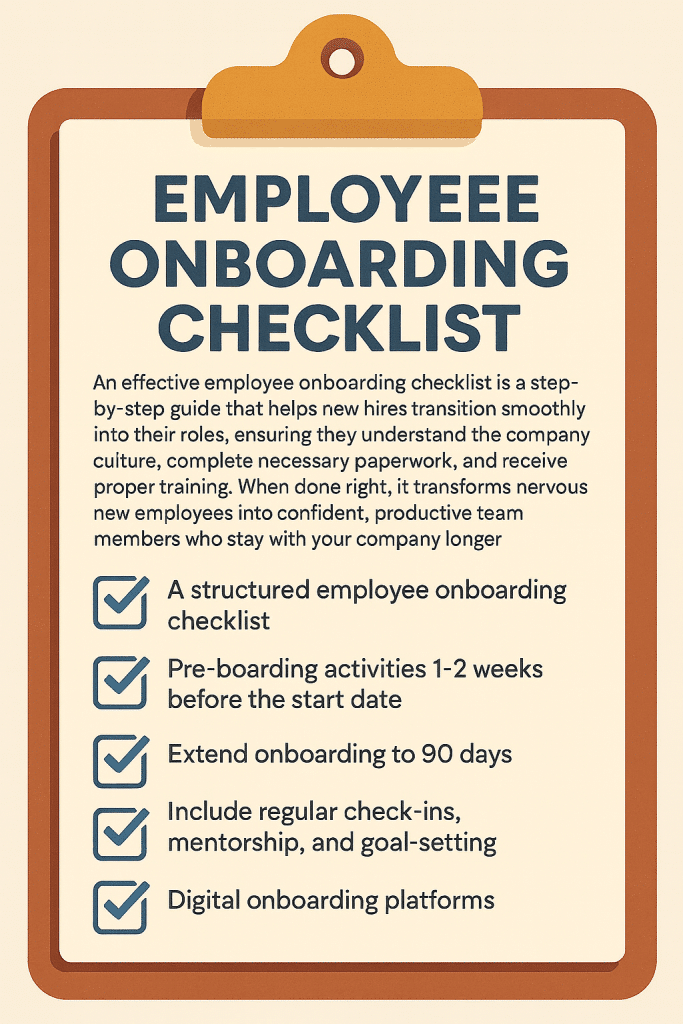
- A structured employee onboarding checklist reduces turnover by up to 82% and improves productivity within the first 90 days
- Pre-boarding activities should begin 1-2 weeks before the start date to create excitement and reduce first-day anxiety
- The most successful onboarding processes extend 90 days and include regular check-ins, mentorship, and goal-setting sessions
- Digital onboarding platforms can streamline paperwork and tracking while maintaining the personal touch new hires need
- Companies with strong onboarding processes see 70% greater productivity in new employees compared to those without structured programs
An effective employee onboarding checklist is a step-by-step guide that helps new hires transition smoothly into their roles, ensuring they understand the company culture, complete necessary paperwork, and receive proper training. When done right, it transforms nervous new employees into confident, productive team members who stay with your company longer.
Why Your Employee Onboarding Process Determines Success or Failure
Most business owners think onboarding is just about paperwork and introductions. That’s a costly mistake. Research indicates that employees who experience poor onboarding are twice as likely to seek other opportunities. On the other hand, companies with effective onboarding processes retain 89% of their new hires for at least one year.
The difference comes down to one thing: making new employees feel prepared, welcomed, and valued from the very beginning. When you nail this, you’re not just filling a position – you’re building a foundation for long-term success. Your new hire becomes more productive, integrates with the team more effectively, and develops loyalty to your company that pays dividends for years.
The Hidden Costs of Poor Onboarding
Every new hire who quits within their first year costs your business between $15,000 and $75,000 in recruiting, training, and lost productivity. But the real damage goes deeper. Poor onboarding creates a ripple effect that hurts team morale, overburdens existing employees, and damages your company’s reputation in the job market. When onboarding is done right, you eliminate these costs while building a stronger, more stable workforce.
| Onboarding Timeline | Key Activities | Business Impact |
|---|---|---|
| Pre-boarding (1-2 weeks before) | Paperwork, welcome packet, workspace setup | Reduces first-day stress, shows professionalism |
| Day 1-7 | Introductions, training, culture immersion | Sets expectations, builds connections |
| Days 8-30 | Skill development, goal setting, regular check-ins | Accelerates productivity, identifies issues early |
| Days 31-90 | Performance review, feedback, long-term planning | Ensures retention, plans career growth |
Building Your Pre-Boarding Employee Onboarding Checklist
The best onboarding starts before your new hire walks through the door. Pre-boarding is where you set the tone and show new employees that they made the right choice. This phase typically runs from the moment they accept your offer until their first day.

Smart business owners use pre-boarding to eliminate 80% of first-day administrative tasks, allowing day one to focus on relationship building and cultural integration. Begin by creating a digital welcome packet that includes your employee handbook, organizational chart, first-week schedule, and answers to frequently asked questions. Send this 3-5 days before their start date with a personal note from their direct supervisor.
Essential Pre-Boarding Documents and Setup

Your pre-boarding checklist should include all necessary legal paperwork, such as Form I-9, W-4 tax forms, direct deposit information, and benefits enrollment forms. Use digital platforms to streamline this process – tools like BambooHR or Workday can automate document collection while ensuring compliance. Meanwhile, prepare their physical workspace with necessary equipment, login credentials, and a small welcome gift that reflects your company culture.
Creating Anticipation and Connection
Don’t underestimate the power of personal connection during the pre-boarding process. Have their future teammates record short welcome videos, create a “getting to know you” survey to share with the team, and schedule a casual coffee chat with their supervisor before the official start date. These touches transform anxiety into excitement and help new hires feel like they already belong.
Designing Your First Week Employee Onboarding Process
The first week determines whether your new hire becomes a long-term success story or another turnover statistic. Research from the Society for Human Resource Management shows that employees who feel welcomed and prepared during their first week are 69% more likely to stay with the company for three years.
Structure the first day around three core objectives: completing administrative tasks efficiently, introducing them to key people and processes, and helping them understand how their role contributes to the company’s success. Avoid information overload by spreading intensive training across the entire first week, rather than cramming everything into a single day.
The First Day Foundation
Start with a warm welcome from leadership, even if it’s just a five-minute meet-and-greet with the CEO or department head. This simple gesture conveys that every new hire is valued by the organization. Follow this with a comprehensive office tour that includes not only their workspace but also break areas, meeting rooms, and informal gathering spaces where company culture truly comes alive.
Building Knowledge and Relationships
Days two through seven should focus on relationship building and foundational training. Schedule one-on-one meetings with key colleagues, provide hands-on training with essential tools and systems, and assign small, achievable projects that allow new hires to contribute meaningfully while learning. According to Harvard Business Review, “New employees who had a structured first week were 58% more likely to remain with the organization after three years.”
| Traditional Onboarding | Strategic Onboarding |
|---|---|
| Focus on paperwork and compliance | Emphasizes culture and relationship building |
| One-size-fits-all approach | Customized based on role and experience level |
| Ends after first week | Continues for 90+ days with regular check-ins |
| Reactive problem-solving | Proactive support and feedback |
| HR-driven process | Manager and team-led experience |
Creating Long-term Success Through Extended Onboarding
Most companies make the mistake of thinking onboarding ends after the first week. The most successful organizations extend their onboarding process for 90 days or longer, recognizing that true integration takes time to achieve. This extended approach leads to 91% higher employee retention rates and significantly faster time-to-productivity.
Your extended onboarding process should include regular check-ins at 30, 60, and 90 days, each with specific objectives. The 30-day check-in focuses on addressing immediate concerns and adjusting expectations. The 60-day meeting assesses progress toward initial goals and identifies opportunities for further development. The 90-day review should feel like a comprehensive performance discussion that sets the stage for long-term success.
Mentorship and Buddy Systems
Assign every new hire a mentor or buddy – someone other than their direct supervisor who can provide informal guidance and answer questions as needed. This person should be a high-performing employee who embodies your company culture and genuinely enjoys helping others succeed. The mentorship relationship should last at least 90 days, with structured check-ins initially every two weeks, then monthly.
Goal Setting and Performance Tracking
The most effective employee onboarding processes include collaborative goal-setting sessions within the first 30 days, creating clear expectations and measurable success metrics. Work with new hires to establish both short-term objectives (30-60 days) and longer-term career development goals. This approach gives them ownership in their success while providing you with clear benchmarks to evaluate their progress.
Technology and Tools for Modern Employee Onboarding
Today’s successful onboarding processes leverage technology to create efficient and engaging experiences while maintaining the personal touch that fosters loyalty. The right combination of digital tools and human interaction can reduce administrative time by 70% while improving new hire satisfaction scores.
Consider implementing an applicant tracking system (ATS) that transitions seamlessly into onboarding, digital signature platforms for paperwork, learning management systems (LMS) for training modules, and communication tools that keep new hires connected with their teams. However, technology should enhance human connection, not replace it.
Digital Onboarding Platforms
Modern onboarding platforms, such as BambooHR, Namely, or Workday, can automate routine tasks while providing analytics on onboarding effectiveness. These systems can track completion rates, identify bottlenecks, and provide insights into which new hires might need additional support. The key is choosing tools that integrate well with your existing HR systems and company culture.
Creating Interactive Learning Experiences
Move beyond boring orientation videos by creating interactive learning experiences. Utilize tools like Articulate or Adobe Captivate to develop engaging training modules, incorporate virtual reality for immersive experiences, or create gamified learning paths that make training more enjoyable. One manufacturing company increased training retention by 40% by gamifying their safety onboarding process.
Measuring and Improving Your Employee Onboarding Process
What gets measured gets improved. The most successful companies treat onboarding as an ongoing strategic initiative, not a one-time process. They track key metrics, gather feedback, and continuously refine their approach based on data and results.
Essential metrics include time-to-productivity (the time it takes new hires to reach full performance), retention rates at 30, 60, 90 days, and one year, new hire satisfaction scores, and manager feedback on new employee readiness. Track these metrics monthly and use them to identify trends, problems, and opportunities for improvement.
Gathering Feedback and Making Improvements
Survey new hires at multiple touchpoints during their onboarding journey. Ask specific questions about what was helpful, what was confusing, and what was missing. More importantly, act on this feedback. When new employees see that their input leads to positive changes, it reinforces their decision to join your company and builds loyalty from the start.
One successful case study involves a 200-employee technology firm that reduced first-year turnover from 35% to 12% by implementing a comprehensive feedback system and making quarterly improvements to their onboarding process based on employee input.
Common Onboarding Mistakes That Cost You Great Employees
Even well-intentioned companies make critical onboarding mistakes that push good employees toward the door. The most damaging error is information overload – trying to cram too much into the first few days. New hires can only absorb so much information before becoming overwhelmed and disengaged.
Another costly mistake is failing to prepare managers for their role in the onboarding process. When direct supervisors aren’t equipped with proper training and resources, they often default to sink-or-swim approaches, leaving new hires feeling abandoned. Studies show that the relationship with their immediate supervisor is the strongest predictor of new employee success and retention.
Avoiding the Paperwork Trap
Companies that focus primarily on compliance and paperwork during onboarding miss the opportunity to create an emotional connection and cultural integration. While legal requirements are important, they shouldn’t dominate the new hire experience. Utilize technology to streamline administrative tasks, thereby freeing up time for relationship-building activities that truly drive retention and engagement.
Remember that your onboarding process is essentially a preview of what it’s like to work at your company. If it’s disorganized, impersonal, or overwhelming, new hires will assume that’s representative of your overall management approach. Make sure your process reflects the best of your company culture and values.
Take Control of Your Employee Onboarding Success
Building an effective employee onboarding checklist and process isn’t just about following best practices – it’s about creating a strategic advantage that attracts top talent, reduces turnover costs, and builds a stronger company culture. Businesses that invest in a comprehensive onboarding experience experience measurable returns in productivity, retention, and employee satisfaction. Start implementing these strategies today, measure your results, and continuously improve your approach. Your new hires – and your bottom line – will thank you for it.
Employee Onboarding Checklist FAQs
What should be included in an employee onboarding checklist?
An effective employee onboarding checklist should include pre-boarding activities like paperwork and workspace setup, first-day introductions and orientation, training on essential tools and systems, regular check-ins during the first 90 days, and goal-setting sessions. The checklist should cover both administrative requirements and cultural integration activities to ensure new hires feel prepared and welcomed.
How long should the employee onboarding process last?
The most effective employee onboarding processes extend for at least 90 days, though some companies benefit from six-month or even year-long programs. Research shows that companies with 90-day onboarding programs have 91% higher retention rates compared to those with shorter programs. The key is providing ongoing support and feedback rather than ending onboarding after the first week.
Who should be responsible for employee onboarding?
Employee onboarding should be a collaborative effort between HR, the direct supervisor, and team members, with the direct supervisor playing the lead role. HR typically handles administrative tasks and compliance requirements, while the supervisor focuses on role-specific training and relationship building. Assigning a mentor or buddy from the team provides additional support and cultural integration.
What are the biggest mistakes companies make during employee onboarding?
The biggest onboarding mistakes include information overload during the first few days, focusing too heavily on paperwork instead of relationship building, ending the process too early, and failing to prepare managers for their onboarding responsibilities. These mistakes lead to confused, overwhelmed new hires who are more likely to quit within their first year.
How can small businesses create effective onboarding without large budgets?
Small businesses can create effective employee onboarding by focusing on personal connections rather than expensive technology, using free tools like Google Forms for digital paperwork, creating simple welcome packets with essential information, and implementing buddy systems with existing employees. The most important elements – clear communication, warm welcomes, and structured support – don’t require significant financial investment but do need thoughtful planning and execution.

Paul Kohn MBA is a seasoned business consultant known for helping businesses maximize tax credits and incentives to fuel growth and profitability. He holds a Master’s in Business Administration and has helped numerous companies secure millions in tax credits and implement effective business strategies. He is regarded as a trusted authority for business owners seeking to optimize their savings and growth.