

Key Takeaways
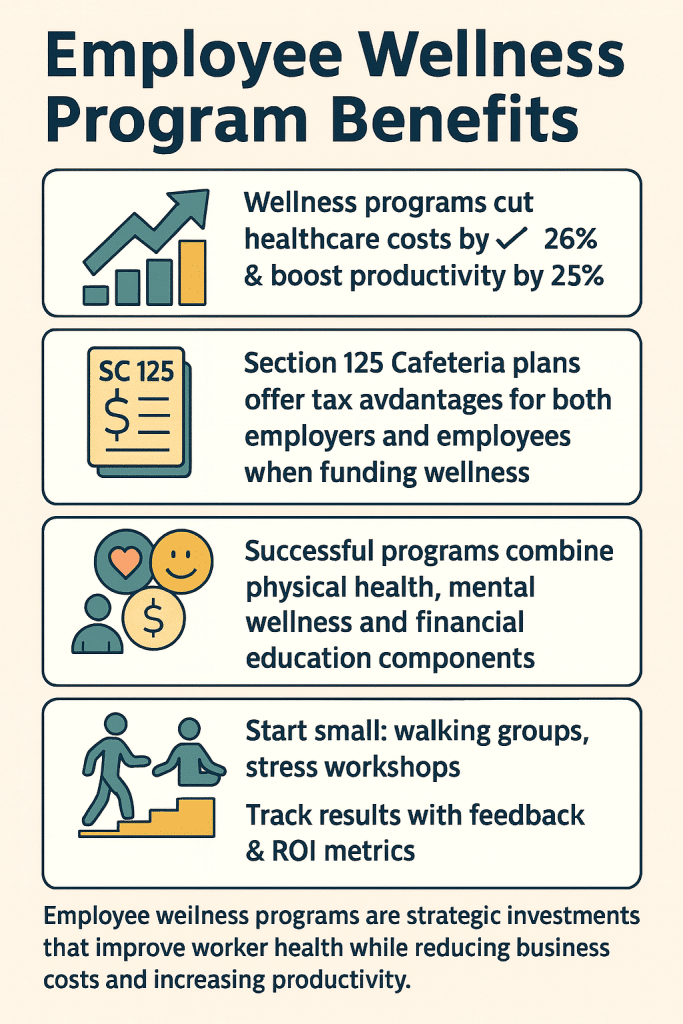
- Employee wellness programs can reduce healthcare costs by up to 26% while boosting productivity by 25%
- Section 125 Cafeteria plans offer tax advantages for both employers and employees when funding wellness initiatives
- Successful programs combine physical health, mental wellness, and financial education components
- Small businesses can start with low-cost options like walking groups and stress management workshops
- Regular measurement and employee feedback ensure program success and ROI
Employee wellness programs are strategic investments that improve worker health while reducing business costs and increasing productivity. The best programs address physical, mental, and financial wellness through a mix of activities, education, and preventive care that employees actually want to use.
Why Employee Wellness Programs Matter for Business Success
Smart business owners recognize that healthy employees are more productive. When workers feel good physically and mentally, they take fewer sick days, stay focused longer, and bring more energy to their tasks. Companies with strong wellness programs achieve tangible results: 25% higher productivity rates, 40% lower turnover, and healthcare cost savings averaging $3.27 for every dollar spent on wellness.
The hidden cost of unhealthy employees goes beyond medical bills. Stressed and tired workers make more mistakes, miss deadlines, and contribute to a negative workplace culture that spreads to other team members. A well-designed employee wellness program stops these problems before they hurt your bottom line.
Tax Benefits Through Section 125 Cafeteria Plans
Section 125 Cafeteria plans provide a powerful tool to fund employee wellness programs while saving on taxes. These plans allow employees to pay for wellness activities with pre-tax dollars, thereby reducing their taxable income. As the employer, you save on payroll taxes. This makes wellness programs more affordable for everyone involved and increases participation rates because employees see immediate savings.
| Business Size | Best Wellness Program Focus | Estimated Cost | Expected ROI |
|---|---|---|---|
| Small (1-50 employees) | Basic health screenings, walking groups | $300-800 per employee/year | $2.30 per $1 spent |
| Medium (51-200 employees) | Comprehensive programs with mental health support | $500-1,200 per employee/year | $3.27 per $1 spent |
| Large (200+ employees) | Full wellness centers, on-site services | $1,000-2,500 per employee/year | $4.50 per $1 spent |
Physical Wellness Program Ideas That Work
Physical wellness forms the foundation of any successful employee wellness program. Workers who feel good in their bodies have more energy, better focus, and fewer health problems that lead to expensive medical claims. The key is offering options that cater to different fitness levels and interests, allowing everyone to participate.

On-Site Fitness Solutions
Creating fitness opportunities at work removes the biggest barrier most employees face: time. Simple additions, such as walking meetings, desk exercises, or lunchtime yoga classes, cost very little but deliver significant results. Companies that provide on-site gyms or partner with local fitness centers see 67% higher participation rates than those offering only gym membership discounts.
Health Screenings and Preventive Care
Annual health screenings catch problems early when they’re cheaper and easier to treat. Offering on-site blood pressure checks, cholesterol testing, and flu shots demonstrates to employees that you care about their health while reducing your insurance costs. Employees who get regular screenings file 23% fewer major medical claims. Partner with local healthcare providers to bring these services directly to your workplace for maximum convenience.
Mental Health and Stress Management Programs
Mental health challenges cost US businesses over $100 billion per year in lost productivity, absenteeism, and medical claims. Stress, anxiety, and depression affect workers at every level, but many employees hesitate to seek help because of stigma or cost concerns. Your employee wellness program can break down these barriers.
Employee Assistance Programs (EAPs)
Employee Assistance Programs provide confidential counseling and support services that employees can access 24/7. Modern EAPs go beyond traditional therapy to include financial counseling, legal advice, and work-life balance coaching. The best programs offer both phone and video counseling options, making help accessible even for remote workers. Companies with comprehensive EAPs report 26% lower healthcare costs and 15% higher employee satisfaction scores.
Workplace Stress Reduction
Simple changes to your work environment can dramatically reduce employee stress levels. Quiet spaces for breaks, natural lighting, plants, and comfortable furniture create a more relaxing atmosphere. Regular team-building activities and open communication policies help workers feel supported and valued. According to workplace wellness expert Dr. Sarah Johnson, “The most successful stress reduction programs focus on changing workplace culture, not just treating symptoms after employees are already burned out.”
Nutrition and Healthy Eating Initiatives
What employees eat during the workday has a direct impact on their energy, focus, and mood. Poor nutrition can lead to afternoon crashes, difficulty concentrating, and increased sick days. Smart employers make healthy eating convenient and affordable through their wellness programs.
Healthy Office Snacks and Meals
Replace vending machine junk food with fresh fruit, nuts, and other nutritious options. Many companies partner with local farms or healthy meal delivery services to provide fresh options at subsidized prices. Workers who eat better during the day report 23% higher energy levels and 18% better focus on tasks. Even small changes, such as providing filtered water stations and herbal teas, can improve employee health and satisfaction.
Nutrition Education and Cooking Classes
Teaching employees about healthy eating creates lasting changes that extend beyond the workplace. Lunchtime workshops on meal planning, reading nutrition labels, and quick, healthy recipes provide workers with practical skills they can apply at home. Companies that invest in nutrition education experience long-term reductions in healthcare costs as employees adopt healthier eating habits.
| Program Type | Implementation Cost | Employee Participation Rate | Health Impact |
|---|---|---|---|
| Basic wellness challenges | Low ($200-500) | 60-75% | Moderate improvement |
| Comprehensive programs | Medium ($1,000-3,000) | 40-60% | Significant improvement |
| Premium wellness centers | High ($5,000+) | 25-40% | Major improvement |
Financial Wellness and Education Programs
Financial stress affects 76% of American workers, resulting in decreased productivity, increased absenteeism, and higher healthcare claims. Employees who are worried about money struggle to focus on work tasks and frequently experience physical symptoms, such as headaches and sleep disturbances. Financial wellness programs address these issues while building employee loyalty.
Retirement Planning and Investment Education
Many employees lack understanding of their 401(k) options and how to plan for retirement, resulting in poor financial decisions that can lead to long-term stress. Regular workshops on retirement planning, investment basics, and maximizing employer matches help workers build confidence about their financial future. Companies that offer comprehensive financial education see 19% higher 401(k) participation rates and 34% higher average contribution amounts.
Debt Management and Budgeting Support
High levels of personal debt create ongoing stress that affects job performance. Financial counseling services help employees create realistic budgets, pay down debt faster, and avoid financial emergencies that might require salary advances or loans. This type of support builds tremendous employee loyalty while reducing the financial distractions that hurt workplace productivity.
Building Team Connection and Social Wellness
Humans are social creatures, and workplace relationships have a significant impact on employee happiness and retention. Workers with strong friendships at work are seven times more likely to be engaged in their jobs and stay with the company longer. Social wellness programs create opportunities for meaningful connections between team members.
Team Building Activities and Events
Regular social events, volunteer opportunities, and team challenges bring employees together outside of normal work tasks. These activities reduce workplace tension, improve communication, and create shared positive experiences. The most effective team building focuses on collaboration and shared goals rather than forced fun activities that employees might resist.
A manufacturing company in Ohio achieved remarkable results after implementing monthly volunteer days, during which employees collaborated on community projects. Employee satisfaction scores increased 31%, and turnover dropped by 45% within the first year. The program cost less than $2,000 annually but delivered over $150,000 in reduced hiring and training costs.
Measuring Employee Wellness Program Success
Successful employee wellness programs require ongoing measurement and adjustment based on real data and employee feedback. Without tracking key metrics, you can’t know whether your investment is paying off or what changes might improve results.
Key Performance Indicators to Track
Focus on metrics that directly tie to business outcomes: healthcare cost per employee, sick days used, workers’ compensation claims, and employee satisfaction scores. The most successful programs show measurable improvements in these areas within 6-12 months of implementation. Track participation rates for various wellness activities to identify which programs employees value most and which may require adjustments or elimination.
Employee Feedback and Program Adjustments
Regular surveys and focus groups reveal what employees really want from wellness programs versus what management thinks they need. Anonymous feedback helps identify barriers to participation and suggests new program ideas. Companies that actively adjust their wellness offerings based on employee input see 67% higher participation rates and better overall results.
Getting Started: Your Employee Wellness Program Action Plan
Creating an effective employee wellness program doesn’t require a huge budget or complex systems. Start small with one or two initiatives that address your team’s biggest health concerns, then expand based on participation and results. The most important step is simply beginning – even basic wellness efforts show positive results when implemented consistently.
Focus on programs that offer immediate value to employees while building toward long-term health improvements. Use Section 125 Cafeteria plans to make wellness benefits more affordable for everyone. Most importantly, listen to your employees and adjust your offerings based on what they actually use and value. A wellness program that sits unused helps no one, but the right initiatives will transform your workplace culture while improving your bottom line.
Employee Wellness Program FAQs
What are the best employee wellness program ideas for small businesses?
The best employee wellness program ideas for small businesses include walking groups, healthy potluck lunches, stress management workshops, and basic health screenings. These low-cost options provide real value without straining tight budgets, and many can be implemented using existing resources or community partnerships.
How much should a company spend on an employee wellness program?
Companies typically spend $300-$ 800 per employee annually on employee wellness programs, although this varies by business size and program scope. Small businesses often start with $200-$ 500 per employee for basic initiatives, while larger companies may invest $1,000-$ 2,500 per employee for comprehensive programs, including on-site facilities.
Do employee wellness programs actually save money?
Yes, employee wellness programs generate an average return of $3.27 for every dollar invested, resulting in reduced healthcare costs, lower absenteeism, and increased productivity. Companies with well-designed programs report 26% lower healthcare costs and 40% lower employee turnover within two years of implementation.
What are the most popular employee wellness program activities?
The most popular employee wellness program activities include fitness challenges, health screenings, flu shot clinics, stress management workshops, and initiatives promoting healthy eating. Walking programs and mental health support services consistently show the highest participation rates across different industries and company sizes.
How do you measure the success of an employee wellness program?
Measure employee wellness program success by tracking healthcare costs per employee, sick day usage, workers’ compensation claims, employee satisfaction scores, and program participation rates. The most effective programs show measurable improvements in these key performance indicators within 6-12 months of launch.

Paul Kohn MBA is a seasoned business consultant known for helping businesses maximize tax credits and incentives to fuel growth and profitability. He holds a Master’s in Business Administration and has helped numerous companies secure millions in tax credits and implement effective business strategies. He is regarded as a trusted authority for business owners seeking to optimize their savings and growth.